
We’re the UK’s Go-To Cleaning Company
High-Standard Cleaning with Compassion and Care.

Losing a loved one can turn your world upside down, and the last thing you need on top of grief is working out who has to pay for clearing out their home. The deceased's estate pays for house clearance, not you. The executor or administrator arranges the work, and the invoice is settled from estate funds, like any other bill the person left behind. Family members are not normally asked to cover clearance costs, as long as there is enough money or assets to cover it. It gets complicated when cash is short, or accounts are frozen, covered below.
When someone dies, everything they owned and owed becomes part of their estate: the house, furniture, any debts outstanding. House clearance sits on the debit side, alongside funeral costs and probate fees, an expense of administering the estate, paid before anything reaches beneficiaries. Ultimately, the estate carries the house clearance cost, sparing families an extra bill.
More than half a million people die in England and Wales every year: 570,988 in 2025, roughly 1,565 a day. Dementia and Alzheimer's disease accounted for 72,272 of those deaths, 12.7% of the total, and many cases involve a house not sorted for years, because the person needed care elsewhere.

The general rule is simple: if the estate has assets, cash, savings, or the house, the executor pays clearance costs from those, not personal wages. Family members who are not the executor inherit what money is left after debts and expenses; they do not fund it. The law does not expect grieving families to fund house clearance work themselves, and beneficiaries are not personally liable for a deceased relative's debts, even if insolvent.
There is a process, and it exists for good reason.
If the deceased left a will, the executor needs a Grant of Probate before dealing with the estate, including instructing a house clearance company. With no will, the closest relative applies for Letters of Administration and becomes the administrator. As of 2026, the probate fee is £526 for estates over £5,000, free for smaller ones, paid from the estate, not the executor's pocket.
Around 147,800 deaths were reported to coroners in 2025, 26% of registered deaths. Some need a post-mortem before the death can be registered, and a coroner referral can delay probate and clearance, leaving the property empty for longer.
Contact the bank, pension provider and utility companies early, since accounts often need updating before clearance begins. Ask the Post Office to redirect their post, so nothing piles up on an empty doormat. Once probate is granted, the document sometimes arrives by post rather than online, and any post arriving afterwards should be opened, since it often holds paperwork post-probate administration needs.
Executors often go wrong here. Everything inside the property is potentially an estate asset until someone decides otherwise. Do not assume everything is worthless just because it looks old. Even things that look like junk, old coins, boxes of paperwork, a stack of vinyl records, can be worth something once someone with the right experience looks properly. Jewellery, antique furniture, watches and collectibles need identifying and valuing before disposal, not skipped into a van. Many families discover items they did not know existed once a room is sorted properly.
If there are other beneficiaries, personal items with sentimental value often need agreement before anything is sold, kept or given away. A decent house clearance company flags anything valuable rather than clearing it with everything else, and this is where professional house clearers earn their fee. Valuable items can be sold at auction or through a dealer, with proceeds going into the estate, sometimes covering the whole bill.

Averaged across several independent 2026 UK cost guides, a standard house clearance, the kind you would get for downsizing, typically costs £450 to £750, with most jobs close to £550. Probate and bereavement clearances run higher, since there is more sorting and often a full property rather than a single room. For a full three-bedroom house, expect £600 to £1,500, higher for larger homes, hoarded properties, or difficult access. A typical house clearance takes anywhere from a few hours to a couple of days, depending on how much needs sorting.
These figures are a rough guide only. Your actual cost depends on the property, so treat them as a starting point, not a quote.
As soon as a bank finds out someone has died, it freezes the accounts, standard practice meant to protect what is left behind. It means the money you need to pay for clearance, council tax, or utility bills is not ready to use.
Many executors pay some costs upfront and claim the money back once probate comes through and accounts are released. Keep every receipt for anything paid on the estate's behalf, so you can be reimbursed and there is a clear record if anyone asks. If cash is tight, the executor can ask the bank to release funds early to pay urgent bills like buildings insurance, and it is the estate's job to pay creditors before anyone else sees a penny.
Ongoing costs do not stop while a property sits empty: council tax and utility bills need paying to keep it secure, coming out of the estate. If cash is needed quickly, it is often faster to sell contents at auction than wait for a full property sale. Executors also settle taxes owed at the date of death, including Income Tax and, where the estate is large enough, inheritance tax; unpaid taxes rank alongside other debts when an estate is tight.
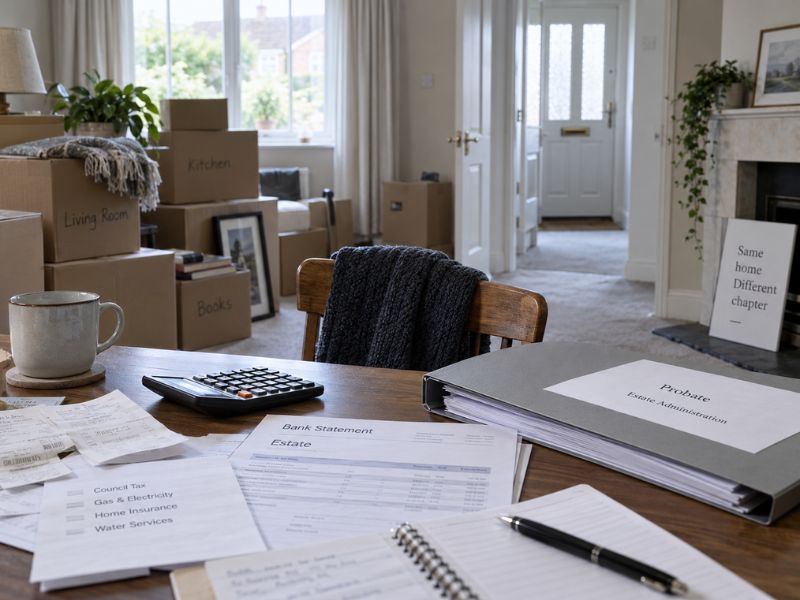
Most estates manage their bills without drama; some do not. An insolvent one exists where debts add up to more than assets. There is a set order for paying debts, and getting it wrong is one of the few ways an executor ends up liable. Under UK law, executors who distribute an estate before settling debts can be held responsible for the shortfall.
Executors must settle debts before distributing to beneficiaries. House clearance costs count as a debt of the estate, so invoices must be paid before beneficiaries see a penny. If money has already gone out and a debt turns up later, the executor may ask beneficiaries to return funds so it can be settled; if that money cannot be recovered, the executor is personally liable, a harsh result for an honest mistake, which is why advice early matters if an estate looks tight. The money left once every debt is settled is what beneficiaries receive; if there is no money left at all, they receive nothing.
Creditors, including a house clearance company waiting on an unpaid invoice, are entitled to be paid first, with a right to claim what they are owed. Executors who pay beneficiaries before creditors usually end up personally liable, and beneficiaries generally cannot claim clearance costs back once paid correctly.
Generally, no. Beneficiaries do not usually pay for clearance costs on a property they inherit, and do not have to sell inherited items straight away, even valuable ones, unless the estate urgently needs cash. That cost comes off the top before anything is distributed, and nobody is forced to sell a treasured item just to settle a clearance invoice.
If the property was owned as joint tenants, it passes automatically to the surviving joint owner and is not part of the estate, so any clearance is the survivor's own choice and expense, not anyone else's cost. This differs from tenants in common, where each person's share becomes part of their own estate, rather than passing to the other owner. If the deceased lived in just one room of a relative's house, the clearance job is naturally smaller, sometimes something a loved one nearby can handle without extra help. Interest in the estate does not automatically mean a financial obligation, and beneficiaries with only a small interest still deserve a clear explanation.
Not every clearance we help with is about a death. Downsizing parents into care raises the same question, and clearing parents' belongings is handled the same way, with costs from their own funds or the sale of their home.

Once the house clearance work is finished, most families decide to sell. It helps to contact a local estate agent before clearance starts, since an estate agent can flag anything worth keeping for viewings, like curtains or a carpet that makes a room look finished. Whoever owns the house can decide what happens next; you do not have to sell before clearance, only after. Asking more than one estate agent for a valuation is sensible, with no obligation to use whichever estate agent quotes highest.
If you are wondering, can I empty a house before probate, the answer will depend on the circumstances and the executor's responsibilities.
An empty house tends to sell faster, since buyers can see the rooms clearly. Any improvements the deceased made, a new kitchen or converted loft, still add to the sale value once the house is on the market, and there is rarely need for further improvements before selling, since buyers of an inherited property expect to do some work themselves.
There is no rush to put the house up for sale. Some executors want it done quickly to release funds and settle debts, since the sale often provides money beneficiaries are waiting for. Others wait, especially if a beneficiary wants first refusal. Some choose to sell shares, premium bonds or other assets, the same way they would sell the house, to raise cash quickly. Putting off the property rarely helps, since unpaid bills build up while empty. Putting the house on the market is a decision for the executor and beneficiaries, not an estate agent or clearance company's call.
A few practical habits help, whether the estate is comfortable or tight. There is no benefit in rushing a decision you might regret, and the right approach depends on individual circumstances. Selling valuable items first is for the benefit of everyone named in the will, not just the estate's bottom line.
Putting a rough budget in writing first helps avoid disagreements later. Get more than one quote, reasonable for the job, since fully licensed clearance firms can show that. For example, a company might reduce its quote if you have already cleared one room, or if you live close enough to sort small items yourself without the hassle of paying someone else. Ask whether the company is a registered waste carrier, and never feel pressured to pay one that cannot prove it. A reputable house clearance company will recycle or donate most of what it collects, and many donate usable items to charity before the rest goes to a clearance company. Many recycle over 90% of everything cleared, sending only a little to landfill, which matters more from 31 March 2026, when new rules require councils across England to collect a wider range of materials from every home. Most quotes include removing carpets, curtains, white goods and furniture, so check what is included and ask for a direct contact you can call if anything turns up. There is no requirement to sell everything through the clearance company, and many prefer to sell valuable items privately or through a specialist auction house. For anyone arranging council house clearance after a death, these same considerations can help make the process more straightforward.
Selling antique furniture, jewellery or other valuables can offset the bill, sometimes covering it entirely. Time spent getting quotes and valuations upfront is rarely wasted; it's the easiest way to keep the bill down.
Say a parent dies leaving a three-bedroom house and some savings. The executor applies for probate, paying the £526 fee from estate funds once released, or upfront and reclaimed later. A local clearance company quotes around £900 for the property, based on volume and specialist disposal. Before clearance, some furniture and jewellery are identified as worth selling separately, raising around £300 that goes back in. The final net cost works out at roughly £600, paid before money is distributed to beneficiaries. Nobody in the family pays anything directly. A cleared house is often the final step in closing a chapter of someone's life, and sorting through belongings usually means sorting through a life, not just a house.

Most house clearances after a death are straightforward once you know the estate pays, not you, and there is no need to rush into house clearance work unless the property needs securing quickly. A few situations are worth pausing on: if unsure the estate can cover its debts, get advice before spending anything, since an insolvent estate has strict rules about which debts get paid first. If there is a dispute between beneficiaries about personal items, sort it out before clearance starts, not after. A solicitor can help where more than one person has a legal interest in the property, such as a spouse who never appeared on the deeds. If inheritance tax might apply, the executor is responsible for that too, alongside clearance invoices, so it is worth understanding what the estate owes before it gets spent. Executors are free to sell as much or as little as they think sensible, as long as it was a reasonable decision at the time.
Death statistics above relate to England and Wales only. Probate, administration and clearance rules differ in Scotland and Northern Ireland, so check the local process rather than assuming the same rules apply.