We’re the UK’s Go-To Cleaning Company
High-Standard Cleaning with Compassion and Care.
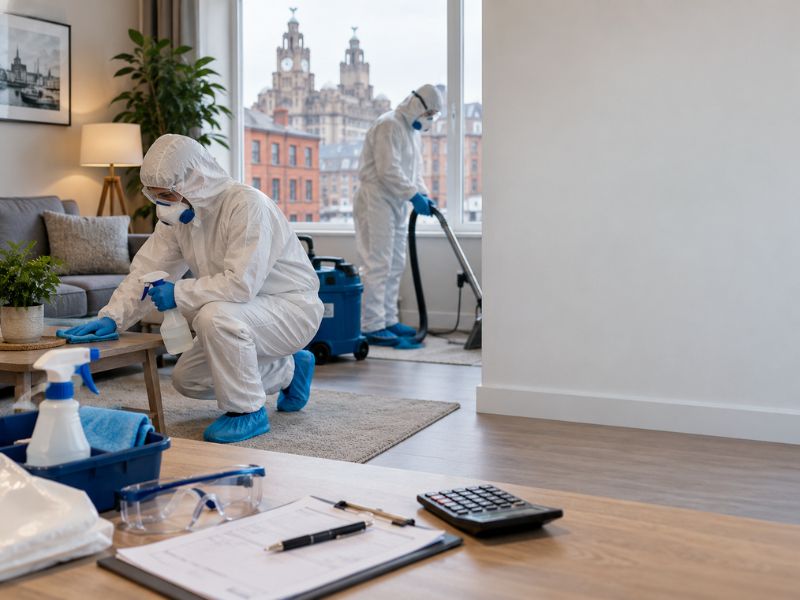
If you want a quick answer, most biohazard cleaning jobs in Liverpool cost somewhere between a few hundred pounds and several thousand pounds. A small, contained job, such as one stain or a handful of needles, often starts around £300 to £600. Trauma and crime scene cleaning tends to sit between £800 and £3,500 or more, depending on how much is affected. Unattended death cleaning, sometimes called after-death cleaning, usually falls between £1,000 and £5,000, and can go higher where decomposition has reached flooring or furniture. This guide to biohazard cleaning costs in Liverpool shows what changes the quote gives you that detail, not one number. Every figure here is a rough guide, and the actual cost varies once we've seen the property. Human waste jobs follow the same rule.
A biohazard cleaning quote is not a plain cleaning price. It covers a risk assessment, specialist labour, decontamination, protective gear, disposal costs, and sometimes restoration work. Two properties with the same contamination can get very different quotes: the materials, depth, odour, bodily fluids, and waste volume involved can all differ. Whether the job involves blood, human waste or something else, a phone estimate from any biohazard cleaning company is only a starting point. That's why biohazard cleaning services in Liverpool that quote over the phone alone tend to revise the price on arrival.
Liverpool has a population of around 508,000, with residential properties, rental properties and commercial premises of every age. The city's working-age population sits at around 343,600, about two-thirds of residents, which explains the size of the private rental market here. Landlords, letting agents, property managers and housing providers often need biohazard cleaning services, including human waste jobs, or tenancy cleaning between tenants. Every property owner gets a different figure, because costs vary based on contamination type and level.

Biohazard cleaning is a broad term, and it helps to know what sits under it before you look at pricing. Our biohazard cleaning services and other specialist cleaning services we're asked about most in Liverpool include blood and bodily fluids cleanup after an accident, assault or trauma; human waste cleaning, covering human faeces, urine and vomit; death cleaning and after-death cleaning, including unattended death cases; crime scene cleanup and other trauma-related work; sharps and needle removal; sewage and other infectious waste incidents; biological contamination linked to hoarding or long-term neglect; and odour treatment and disinfection services following any of the above.
Each calls for a different mix of specialist equipment, time and disposal work, so a single flat rate for biohazard cleaning doesn't exist. Every one of these sits under our biohazard cleaning services, each with its own specialist cleaning cost. They're the cleaning services in Liverpool people ask us about most.
Contamination type and the size of the affected area are usually the two biggest things behind any quote.
The size of a visible stain isn't a good guide to the final cost. Blood and other bodily fluids can soak through carpet, underlay, mattresses and floorboards before anyone notices, and trauma scenes can also involve broken glass or other sharp hazards.
Trauma and crime scene cleaning in Liverpool typically costs between £800 and £3,500, and sometimes more, depending on contamination and how many rooms are affected. Liverpool records tens of thousands of crimes a year, roughly 70,000 to 80,000 offences on recent data, part of why crime scene cleanup has become its own specialist service rather than a job for a general cleaner. This kind of professional cleaning needs safe removal and full disinfection, since blood and body fluids can carry infection risks even once dry. See our guide to crime scene cleaning costs in Liverpool for more detail.
Unattended death cleaning usually costs between £1,000 and £5,000, and can go higher where decomposition has reached flooring, furniture or other soft materials. A longer gap between the incident and discovery lets fluids and odour spread further, so a scene found quickly needs far less work than one left for days. Odour is often the biggest complication in death cleaning, since it can cling to soft furnishings long after the contamination is gone. After-death cleaning often touches on probate and next of kin, so we treat every after-death cleaning job with the same care. See our guide to after-death cleaning costs in Liverpool for a full after-death cleaning cost breakdown.
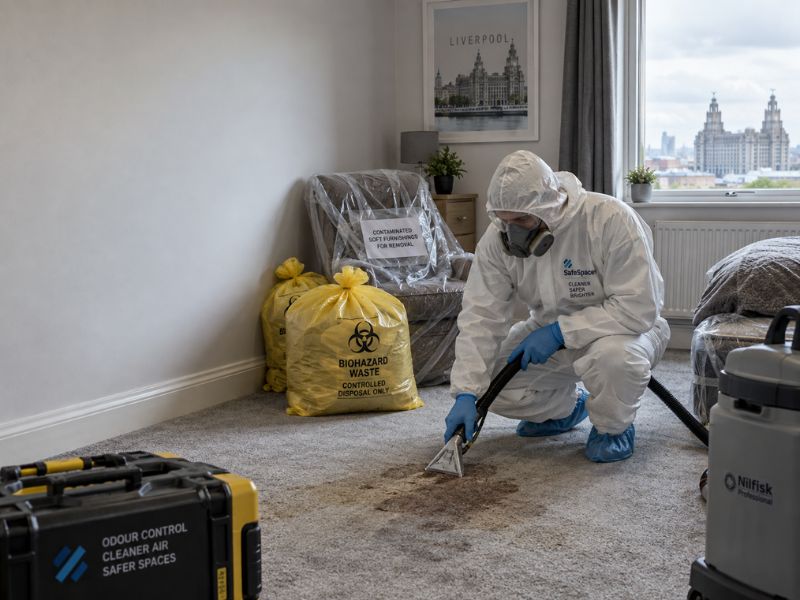
Human waste cleaning covers faeces, urine and vomit, and comes up more often than people expect, including in hoarding situations, medical incidents and tenancy cleaning cases. Hoarding jobs can also bring pest control needs alongside the biohazard work. Where human waste contamination spreads across multiple rooms, or structural materials need removing, the price can go past £5,000. Urine cleaning can mean treating flooring and skirting for a long time, and repeat urine cleaning is common, which is why a mop and bucket won't fully deal with human faeces or human waste once dried in.
Sharps and discarded needles aren't ordinary household waste. They need specialist containers, protective equipment and controlled disposal under UK regulations, which pushes the price above a general clean. Needle removal jobs can start at around £150, depending on numbers, access and disposal method. NHS data shows around 85% of relevant injection devices bought through NHS Supply Chain in 2024 were safety-engineered, and among people who reported injecting drugs, the median number of needles collected per person in England's 2024 data was 240. Those figures show why sharps collection sits with trained professionals rather than general cleaning staff, and why sharps sit among serious health hazards rather than routine tidying.
Porous materials are one of the biggest things that changes a quote. Carpet, underlay, mattresses, upholstery, floorboards, and some plaster soak up fluids in a way hard surfaces don't, and bodily fluids in particular can sit unnoticed for weeks below the surface. Disinfecting the surface isn't enough once contamination has gone into a porous material, because bacteria are still sitting inside it. Affected materials that can't be safely disinfected are removed and disposed of properly, and contaminated materials of this kind need specialist cleaning, where a quote can jump.
Deep sanitisation on a job like this often means lifting damaged flooring, cutting out affected plaster or skirting, and treating the structure underneath before anything new goes back down. In a few cases, substances hazardous enough to affect the building fabric mean whole structural parts need to come out. Some jobs also need builders cleaning afterwards, once decontamination is finished. The severity of the contamination decides how much work is needed. Two properties needing biohazard remediation can look similar but need very different treatment, which is why contamination control has to be planned before any deep cleaning starts.
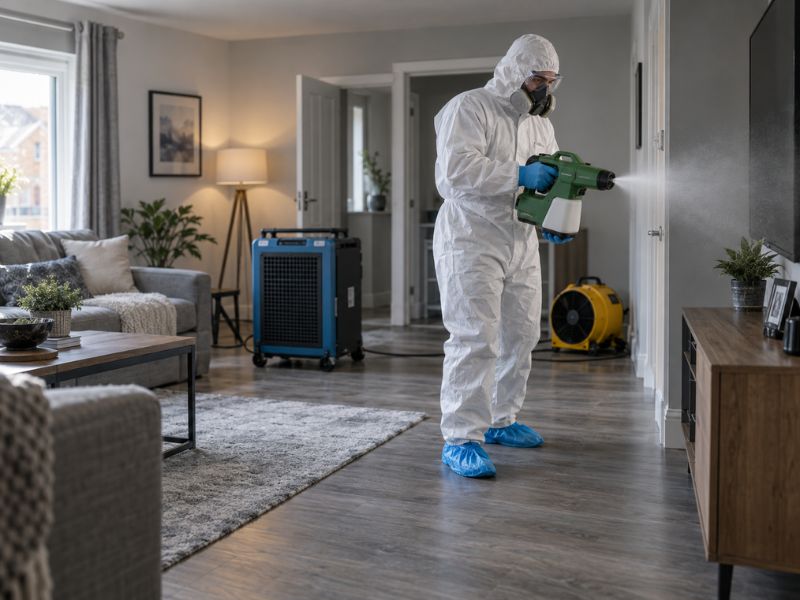
Biohazard cleaning services are only as good as the equipment and training behind them, and a biohazard cleaning company is only as good as that standard applied consistently. Not every specialist cleaning services provider in Liverpool works to the same level. Specialist equipment such as fogging machines, air scrubbers and specialised equipment for testing surfaces all play a part, alongside professional-grade disinfectants well beyond a supermarket spray. A specialist team should always work in full protective equipment on jobs involving blood, body fluids or human waste, since it's there to eliminate health risks for the cleaners and the property.
Waste handling matters as much as the clean itself. Trained professionals follow set safety protocols, from the initial assessment through to final disposal. Biohazard cleaners should be able to explain their process, and biohazard cleaners who can't walk you through a job usually can't justify their price. Biohazard cleaners on site should be happy to explain it. Proper decontamination services also mean being environmentally responsible about how hazardous materials are broken down and disposed of, since hazardous materials can't just go in general rubbish. Skipping this can leave a property with serious health risks that only show up later, which is exactly what UK health and safety regulations exist to prevent.

On top of the contamination itself, three more things move a quote up or down: how much waste there is to remove, how easy the property is to get into, and how fast the job needs to happen.
Waste disposal is often a bigger part of the bill than people expect. Specialist waste teams treat bodily fluids the same way, whatever the cause, whether accident, break-in, or medical event. You're paying for packaging, transport, and safely disposing of contaminated materials, infectious waste included, all under UK environmental regulations. This waste can't go in a normal bin, and clinical waste collection fees run well above standard commercial waste rates. Waste removal like this rarely shows up in a rough phone estimate, but it can be a large share of the final invoice.
Getting people, equipment and waste in and out of a property affects the price more than most expect. Upper floor flats, restricted parking, narrow stairwells or shared access can all add to labour time, and location within Liverpool matters too. Labour is one of the biggest variables in any quote: a single person cleaning one room is a very different job to a multi-person team working across several contaminated rooms, since team size reflects the work's scope. Wherever we can, we aim for minimal disruption to a property owner or tenant, since these cleaning services rarely follow a fixed script. Minimal disruption usually means fewer visits rather than one rushed one.
Emergency and out-of-hours attendance usually costs more, since staff must be mobilised outside normal hours at short notice. Many biohazard and emergency cleaning services in Liverpool, ourselves included, operate around the clock, with rapid response call-outs and arrival often possible within hours. An emergency cleaning service also has to plan for weekends and bank holidays, not just evenings. Same-day service is common for urgent cases such as a trauma scene or flood restoration, sometimes alongside emergency services already on site, since bodily fluids and other biohazards left untreated only get harder to deal with. That speed comes at a cost: pulling trained professionals in outside usual hours, so urgency is one of the clearest ways a price can move.
Odour can add a lot of complexity to a job, especially in unattended death cases where decomposition has set in. Standard cleaning methods and air fresheners won't deal with this smell, since it comes from inside materials rather than the surface. Odour treatment can add anywhere from a small amount to a large part of the final quote, and it's one part of a death cleaning cost that's easy to underestimate.
Heat and airflow sometimes need managing during the clean, since warmth and poor ventilation can make odour and contamination worse. Electrostatic disinfection is one method used on jobs like this, since it coats surfaces more evenly than a standard spray and wipe, and it pairs well with other disinfection services used deeper in a property. The goal with this kind of odour treatment is deep structural remediation alongside the smell itself, not masking it, so the property is a genuinely safe environment again, not one that just smells better for a week. Every job finishes with that safe environment confirmed before we leave, which is also what lets us restore safety to a home or business without a lingering reminder of what happened.
The cheapest-looking quote isn't always the cheapest option once the job's finished. A price that leaves out hazardous waste disposal, deep cleaning, PPE, odour treatment, or material removal can look attractive at first, then grow once that work turns up as an add-on later.
A proper written quote should give you a clear cost breakdown and cover the legal and practical sides of the job, not just the cleaning services themselves. Look for the following in any quote you're given:
Biohazard cleaning sits under rules a general clean doesn't, and a quote that skips over compliance, local authorities' waste rules, or disposal is usually missing costs it adds back later. That's the clarity Liverpool customers deserve when asking about biohazard cleaning costs, whether the job is for a landlord, a housing provider, or a family dealing with a private residence.
The more detail you give us, the closer our first estimate will be to the final price. Biohazard cleaning isn't limited to crime scenes: it also covers unattended deaths, accidents, infectious contamination, sewage incidents, sharps and hoarding environments, so the questions we ask depend on what's happened and whether specialist treatment is likely to be needed.
When asking for a quote, it helps to have the following ready:
Our cleaning services team uses this for an initial assessment before confirming a final price, and a short call or a few clear photos usually speeds it up. Every one of our cleaning services is priced individually, and this is also the stage where we'd flag anything needing local authorities or insurers, so there are no surprises once work starts, whether it's a human waste clean, a trauma scene or something else.
Every figure on this page is a rough guide, and the actual cost depends on what we find when we look at your property. Our biohazard cleaning services team in Liverpool can talk you through your situation and arrange an assessment at a time that suits you, aiming to restore your property to safety quickly and honestly, the same way we approach every one of our professional cleaning services.