We’re the UK’s Go-To Cleaning Company
High-Standard Cleaning with Compassion and Care.
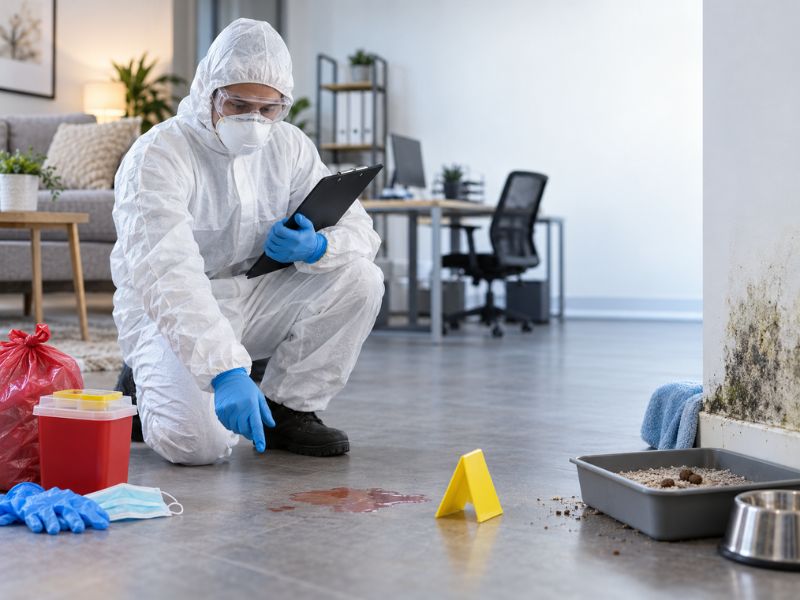
Quick answer: A biohazard is any biological substance that can harm human health once someone is exposed. That covers blood and bodily fluids, sewage, animal waste, mould, contaminated food, needles, sharps and medical waste, whatever the setting: hospital, office or front room. If a biological agent such as bacteria, a virus, a fungus or a parasite is present in enough quantity to cause infection, allergy or toxicity, it counts as one of the biohazards professionals are trained to deal with. Most of these biological hazards need nothing more than good hygiene and basic prevention. A smaller number need a trained team to clean up safely. This guide covers what biohazards look like, where these hazards turn up in homes and workplaces, and when ordinary clean-up is no longer enough.
A biohazard is any biological material that threatens the health of living organisms, primarily humans. In UK workplaces, the term covers biological hazards such as bacteria, viruses, fungi and parasites, along with substances that can trigger infection, allergy or toxicity. That covers everything from a spilt bag of raw chicken to a flooded cellar full of sewage.
Biological contamination can be invisible. A worktop or a pool of standing water can carry infectious microorganisms even when it looks spotless. Biohazards don't have to look dirty, rotten, or dangerous to count. The real question is exposure: breathing it in, swallowing it, or getting it on broken skin.
That's why an ordinary home can have genuine biohazards inside it. Mould in a bathroom, sewage backing up through a drain, animal waste in a garden, contaminated food left too long, or a needle dropped by a previous tenant are all examples of biological hazards that don't need a laboratory. Some biohazardous materials are obvious the moment you walk in; others, like biological materials trapped under a floor, stay hidden until someone gets ill.

Blood gets most of the attention, but there are plenty of other biohazards you'll come across. A few of the most common:
Homes with pets or livestock carry extra risk, since animals can pass parasites and bacteria to humans through contact or waste. Food is another one that catches people out: poor hygiene in food production and storage can cause health concerns that only show up days later. UKHSA data shows England recorded 10,406 confirmed Salmonella cases in 2025, the highest in a decade, and close to 70,000 Campylobacter cases, among the most common foodborne diseases in England each year. Norovirus follows a similar pattern: laboratory reports for the 2025 to 2026 season ran over 50% above the five-year average, showing how fast this kind of contamination spreads.
Rodent droppings can spread diseases such as hantavirus and salmonella, and some people react to mould or animal mess with allergic reactions rather than infection. A small number of workplaces, mainly research and diagnostic settings, deal with recombinant DNA and genetically modified organisms, under their own set of health risks. Most homes and businesses never touch that end of the scale, but it's part of the full picture of what biohazards cover.
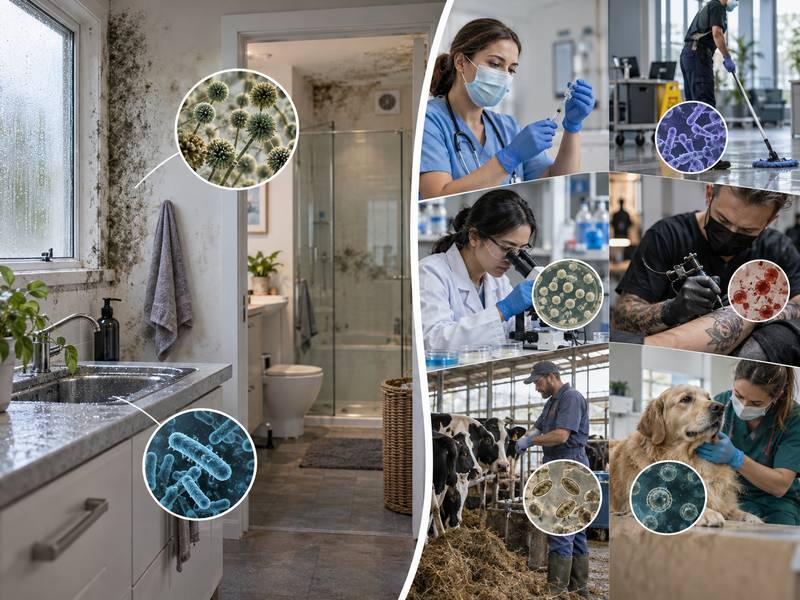
A workplace doesn't have to be a hospital for biohazards to be part of the job. Agriculture, waste collection, cleaning, emergency services, laboratories, healthcare, tattooing, and certain beauty procedures all involve exposure to biological hazards. Farms, vets, and pet shelters work with animals every day, and animals bring a steady biological risk into any workplace built around them. Many industries carry some level of this risk without anyone thinking of themselves as working around biohazards, which is why training matters for workers across such a range of industries. Anywhere skin gets broken, whether a tattoo studio or a piercing bar, there's a chance for blood or other biological material to pass between people.
In homes, damp and mould are far more widespread than most people assume: official English Housing Survey figures for 2024 to 25 show that 30% of households reported a problem with condensation, damp or mould, and around 9% of English dwellings had at least one Category 1 hazard under the Housing Health and Safety Rating System, with damp among the more common types. That doesn't mean every damp patch is one of the serious biohazards found in English homes: the level of risk depends on the type and extent of the mould, how much people are exposed, and the condition of the building. Learning to identify a minor patch versus a spreading problem makes a real difference to cost and health risk down the line.
Mould thrives in damp, poorly ventilated spaces such as bathrooms and kitchens, and can travel through a building's air via HVAC systems rather than staying on one wall. Poorly managed hot and cold water systems can also let Legionella bacteria multiply, raising the risk of Legionnaires disease, a building-related biohazard rather than one that comes from obvious mess. Left unchecked, these hazards can turn contaminated areas into a genuine threat to anyone living or working there, since they affect humans directly whether or not the environment around them looks affected.
Not all biohazards behave the same way or need the same response.
Blood and bodily fluids, including urine, carry bloodborne pathogens such as hepatitis B and other forms of hepatitis, and in some cases HIV. Any incident involving a large amount of blood, whether from an accident or an undiscovered death, needs real caution. An unattended death in particular can release harmful pathogens into a property as decomposition sets in, which is why this kind of job needs a specialist rather than a standard clean. Our trauma and crime scene cleaning team handles this directly, using the personal protective equipment the job calls for.
Sharps waste includes used needles and broken glass: a puncture wound is all it takes to expose someone to bloodborne pathogens or other infections. Needles turn up in odd places, from gardens to rented properties left behind by a previous occupant. If you find one, don't touch it or try to clean up the area yourself. We run dedicated needle sweeps for exactly this, using proper training and protective gear.
Healthcare settings face strict protocols for a reason, and the same applies anywhere biohazardous materials are generated, not only in hospitals. Improper disposal of medical waste or contaminated dressings can spread infection well beyond the room it started in. You'll usually spot this material by the biohazard symbol, the black-on-yellow trefoil mark used to flag containers that need special handling.
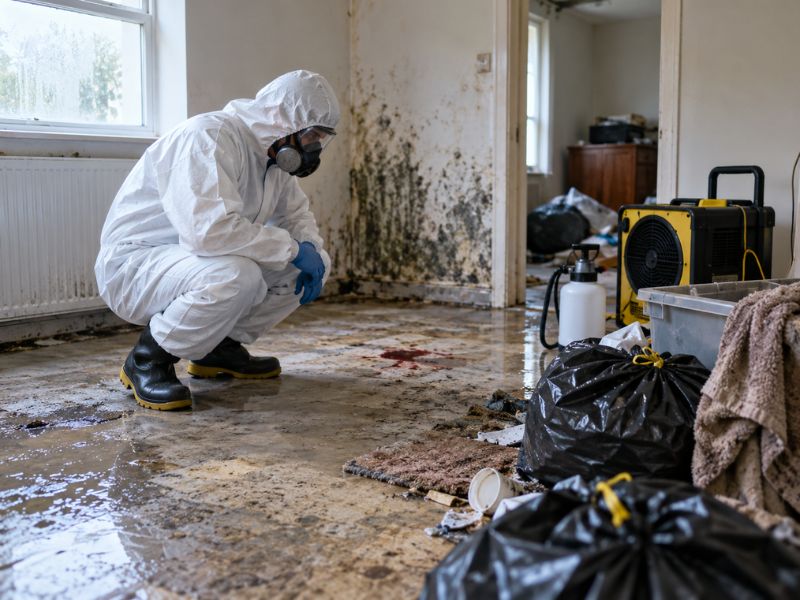
Mould is a common biohazard, but it doesn't automatically mean a severe one. A small, isolated patch from a leaking pipe differs from widespread black mould throughout a property's walls and soft furnishings. Water damage from a burst pipe or a persistent leak often starts the growth, so drying a property out quickly matters as much as the clean-up itself. What matters most is the type, the extent, and how long people have been exposed, since prolonged exposure drives the worst health effects.
Good cleaning practices reduce everyday risk at home or in the workplace, but they're not built for the contamination genuine biohazards leave behind. Once you're dealing with a large blood spill, an unattended death, a sewage backflow, sharps, or mould spread through multiple rooms, standard products and a mop won't remove the risk. They can even spread it further by pushing contaminated material into surfaces that weren't affected before, exactly the sort of biohazardous conditions a specialist team is trained to identify and control.
This is why it's important to understand when professional biohazard cleaning is required, particularly when contamination could pose a serious health risk or can't be safely contained with ordinary cleaning methods.
A foul or persistent odour is often the first sign something has moved past ordinary cleaning, particularly with sewage, decomposition, or long-standing damp. Clutter on its own isn't one of these biohazards, but once waste, animal mess or spoiled food build up inside it, a property can tip into genuine health-risk territory. If you're not sure whether a cluttered home has reached that point, we've written a separate guide on the signs a cluttered home has become a health or biohazard risk.
Biohazard cleanup is also a legal requirement in a lot of these situations, not just a good idea, which is worth knowing before anyone decides to handle it on their own.
This is general information, not legal advice. Employers have duties under the Health and Safety at Work Act 1974 to protect workers and the public from harm, including biological hazards. COSHH, the Control of Substances Hazardous to Health Regulations 2002, sets out how employers must assess and control exposure to hazardous materials and hazardous substances, biological hazards included, so workers aren't put at unnecessary health risks. Employers must also have procedures for identifying and reporting these risks before they become a bigger threat to workers, and for giving staff training as part of everyday prevention practices.
UK regulations classify biological hazards, whether bacteria, viruses, fungi or parasites, into four hazard groups, based on how likely an agent is to cause infectious diseases, how serious the disease can be, whether it spreads easily, and whether effective treatment exists. This sits in the Approved List of biological agents, updated to its sixth edition in 2026 with revised classifications and vaccine advice. If your work brings regular contact with biological agents, that list is the reference point for how they're categorised, and it helps employers identify where controls need tightening.
If you've found something that looks like one of these biohazards, a few things are worth doing before anyone else gets involved:
Professional remediation starts with an assessment: a trained technician works out what's present, how far it's spread, and what level of personal protective equipment and containment the job needs. Contaminated materials are removed and disposed of through licensed waste routes rather than standard bins, because biohazardous waste has its own disposal rules under UK regulations.
The affected surfaces are then cleaned and disinfected using products suited to the specific biological risk, not just general-purpose cleaners. Porous materials such as carpet or plasterboard often can't be fully decontaminated and need replacing rather than cleaning. Trained professionals know how to clean up without spreading contamination further, protecting workers, animals, occupants and the surrounding environment, and once the work is done, a technician checks the area again before anyone moves back in.

Costs vary depending on what's involved. Based on pricing from several UK providers, small jobs such as a single needle sweep often sit in the low hundreds of pounds. Larger jobs, including extensive trauma cleaning or contamination across multiple rooms, can run into the low thousands, and severe incidents can go higher still depending on the property's size, the waste volume, and how much specialist disposal is needed.
Treat these figures as a rough guide only. Actual cost varies based on a proper assessment of your property and situation, so it's worth getting a direct quote from professionals rather than relying on averages.
A small spill dealt with straight away is usually fine with household products. Anything involving blood, sewage, sharps, or an unattended death should go to trained professionals, since handling it without the right protective equipment raises your own exposure rather than reducing it.
Good ventilation, regular checks for leaks, prompt repairs, and clean food storage areas all help prevent biohazards from developing. Reporting damp or drainage issues early stops a small problem from turning into a bigger job.
No. UK classifications distinguish between biological hazards based on how easily they spread and how serious the illness can be. A small mould patch and a room affected by sewage sit at very different ends of the same scale, though both count as biohazards under the same broad definition.
Plenty. Contaminated water inside a wall or mould growing behind furniture can both be biohazards without anything obvious on show, which is why professionals check the less obvious parts of a property, not just what looks affected.
Our goal on every job is the same: return the property to a safe environment for the humans who live or work there next.