
We’re the UK’s Go-To Cleaning Company
High-Standard Cleaning with Compassion and Care.
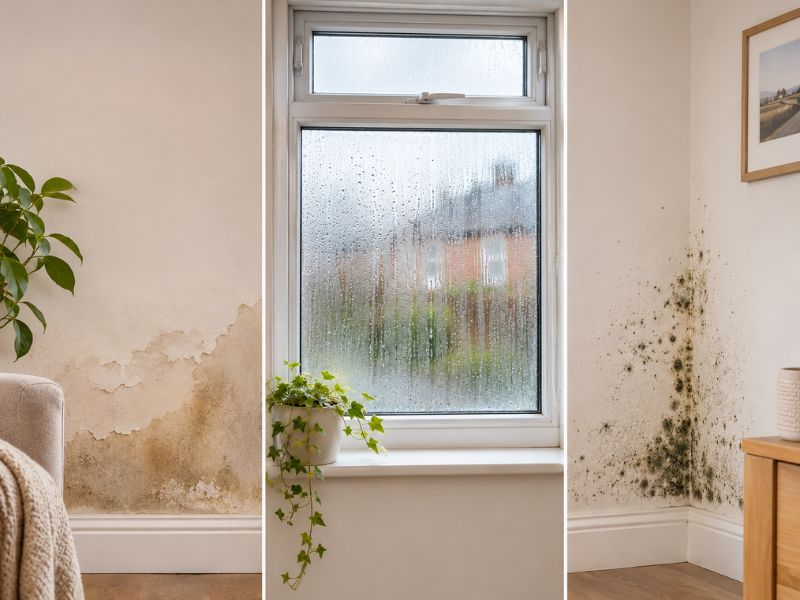
Condensation forms when moist air hits a cold surface and turns into water. Damp is water that has got into your walls, floors, or ceilings. It comes from outside, from the ground or from a leak. Mould is a fungus. It grows anywhere that stays wet long enough.
So condensation and damp are the causes. Mould is the result. If the wet patch wipes away but returns in cold weather, think condensation. If it stays put, leaves marks or gets worse after rain, think damp. The rest of this guide shows you how to tell them apart, what each one costs to fix and when the law steps in.

The difference is where the water comes from. Damp gets in. Condensation is made inside the home by normal daily life.
Damp is not one problem. It is three. Rising damp comes up from the ground. Penetrating damp comes in from outside. Condensation damp comes from moisture in the air indoors.
With the first two, the water is in the building fabric itself. That is why damp walls stay cold and clammy, even after a dry week.
Condensation is the most common cause of damp. Cooking, showering and bathing all release water vapour. So does drying clothes indoors. The air fills up with moisture. When that moist air meets a cold surface, it cools and drops its water as tiny droplets.
Windows, external walls, ceilings and poorly insulated corners are the usual spots. The water sits on the wall surface. It is not inside the wall.
The numbers show how common the problem is. In the 2024-25 English Housing Survey, 31% of households in England reported condensation, damp or mould. About 1.4 million homes had a recorded damp problem in 2024. Around 823,000 had serious condensation or mould problems.
The split matters. Around 3% of English homes had serious condensation. That compares with 2% for penetrating damp and 1% for rising damp. The three look alike on a wall, so people guess. A wrong guess costs money.
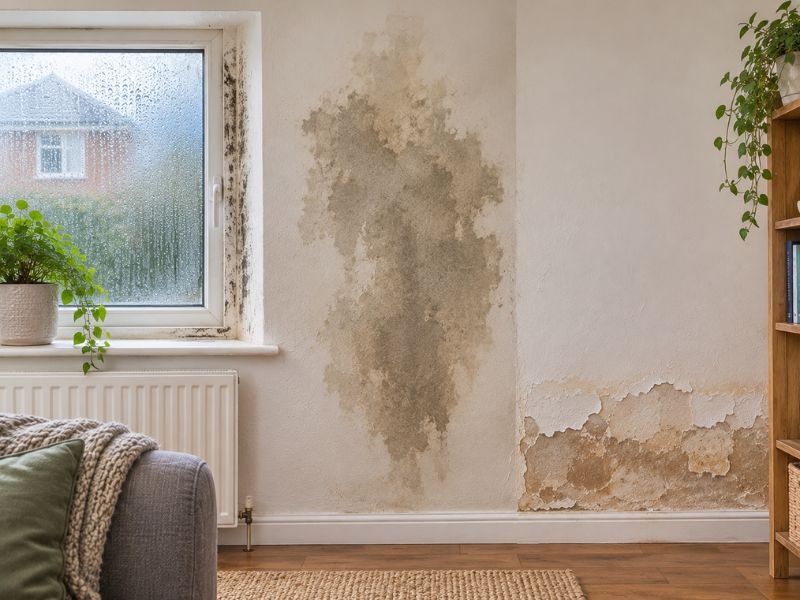
You do not need a special kit for a first check. You need a few minutes and a clear head. Start with where and when the moisture shows up.
Condensation sits where surfaces are coldest. Think window frames, the tops of external walls, ceiling corners, and the back of wardrobes. These cold spots gather water droplets that you can wipe away. It gets worse in colder months, especially in poorly ventilated areas.
Damp is different. It leaves damp patches that do not wipe away. They feel cold, they stain, and they often stay all year. Look for peeling paint, stained plaster, or a wall that feels wet even when the room is warm.
Here is a simple test. Tape a square of kitchen foil to the wall and leave it for 24 hours. If the outer face is wet, you have condensation. If the side against the wall is wet, the water is coming from inside the wall. That points to damp.
A moisture meter helps too. It shows moisture levels in plaster and brick. But salts can push the reading up, so one number proves nothing on its own. Finding the source of the moisture comes first. Treat the wrong thing and the problem comes straight back.
Penetrating damp is easy to spot once you watch the weather. It shows as damp patches that get worse after rain. About 4.3 million households noticed new moisture damage after heavy rain or storms in the previous year.
Condensation follows temperature instead. It builds on cold nights and eases when the heating comes on. Rising damp barely changes. It sits low on the wall in all weathers.

Same house, same family, different rooms. One bedroom runs wet and the next stays dry. Three things explain most of it.
Warm air holds more water than cold air. When it hits a cold wall, it cannot hold its water any longer. The water drops out as droplets. A hot shower fogging a cold mirror is the same thing.
With poor ventilation, the moist air stays in the room. It builds up until it finds the coldest wall or window. Excess humidity does the rest.
Think about a normal day. Kettles boil. Pans steam. Showers run. Wet washing hangs on radiators. Drying laundry indoors puts a lot of water into the air, and a tumble dryer with no outside vent does the same. Each habit adds more moisture to a room that may have nowhere to send it.
Cold walls collect more water. Around 58% of households that could not keep their homes warm in winter reported damp, condensation or mould problems. For households that could keep warm, the figure was 27%.
Cold surfaces such as uninsulated external walls and single-glazed windows are where the water lands first. New homes are not safe either. Condensation can develop in a new, well-kept property if ventilation and moisture control are weak.
Water on a surface is step one. Mould is step two.
Black mould often appears near cold surfaces because that is where condensation gathers. Condensation mould spreads along the tops of walls, behind furniture and around windows. Mould growth needs three things: moisture, something to feed on, and a bit of time. Mould thrives in damp, poorly ventilated areas of the home.
It can keep growing after the visible water has gone, if the material underneath stays wet.
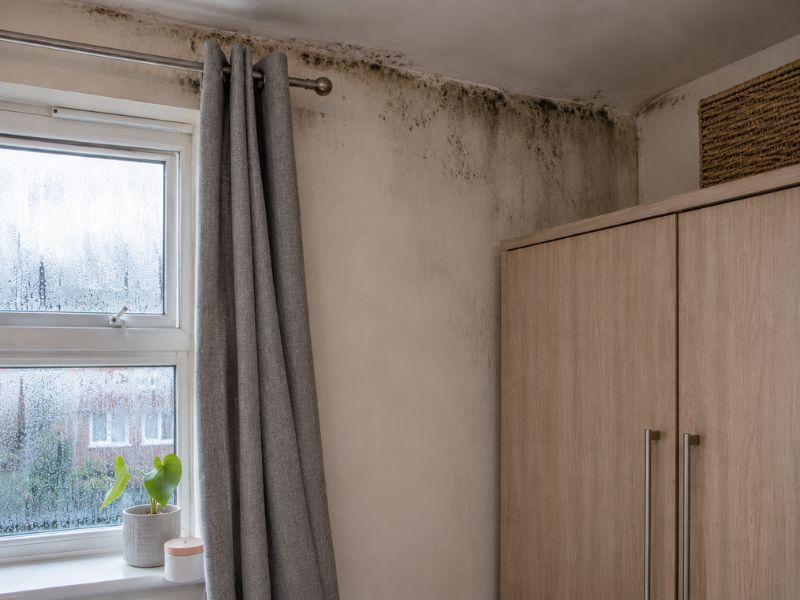
Black mould is the one most people know. But mould can also be green, grey, white or brown. It grows on wallpaper, plaster, ceilings, furniture and soft furnishings.
A musty smell with no visible cause is a clue. It can point to mould growth behind furniture or wallpaper.
Mould releases tiny mould spores into the air. Breathing them in can trigger allergies, asthma symptoms and other breathing problems. Damp and mould also hurt indoor air quality. Children, older people and anyone with a lung condition face the greatest risk.
Around 1 million children lived in damp homes in England in 2024. That is about 9% of dependent children. In the worst cases, long exposure can lead to serious illness or death. In 2020, two-year-old Awaab Ishak died after long exposure to mould in his family’s social housing home in Rochdale. If anyone at home has breathing problems and you can see mould, speak to your GP.
Rising damp gets blamed a lot. It is less common than most people think, so it pays to rule out the other two first.
Rising damp starts when groundwater is drawn up through brick, stone and mortar. As moisture rises, it carries salts from the soil. The salts leave tide marks and white salt deposits on the wall. Rising damp typically affects walls up to one metre high, and it hits ground floor walls first.
Many homes have a damp-proof course. This is a barrier built into the wall to stop water climbing. If the damp-proof course fails, or soil piles up above it, rising damp can start.
You might also see plaster blowing, skirting boards rotting, and paint lifting. Rising damp can also feed mildew and black mould. Old lime plaster lets a wall breathe and copes better than modern gypsum plaster. After treatment, salt-laden plaster often needs replacing, because the salts keep pulling in moisture from the air.
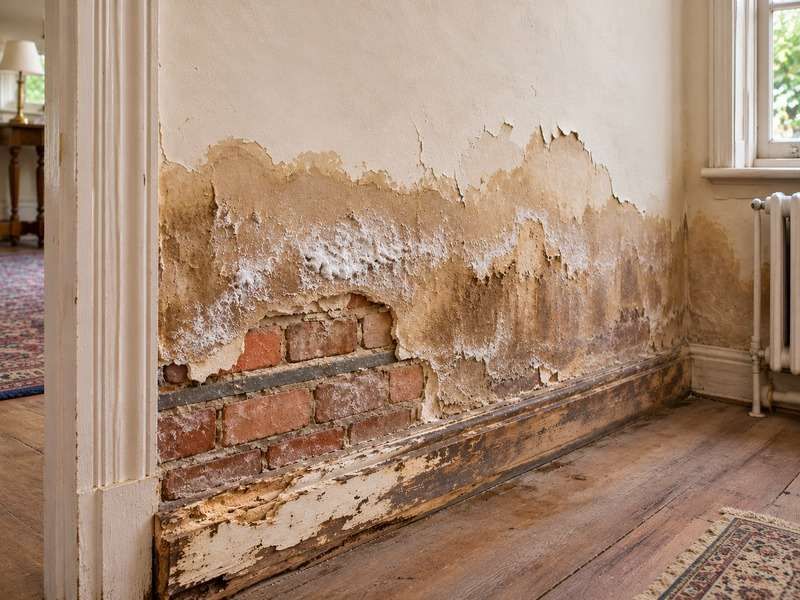
Fewer homes have it than condensation, but where you live matters. About 3% of privately rented homes had rising damp, compared with around 1% of owner-occupied homes.
Because it is rare, other problems get blamed on it. A damp patch at head height is not rising damp. A wet corner under a window is not rising damp. Painting over damp patches rarely solves anything, because the source of the water is still there.
Use this as a first filter, not a final answer.
Penetrating damp is water that enters a building from outside because of a defect. Unlike rising damp, it can show up at any height. Unlike condensation, it does not need cold surfaces or moist air indoors.
The usual causes are leaking gutters, cracked render, damaged roofs and worn brickwork. Cement render can crack and let rain in behind it. Solid walls soak up rain like a sponge, so older homes suffer more. A failed seal around a window lets water in too, and leaking pipes inside a wall can leave the same marks. Water can then track from external walls into internal walls.
Penetrating damp affected about 4% of privately rented homes, compared with 2% of owner-occupied homes. Fixing penetrating damp means fixing the outside first, so you stop moisture entering the wall before you touch the plaster.
Look for brown stains on walls and ceilings, bubbling plaster and lifting wallpaper. It can damage plaster and leave a wall cold to the touch. Patches often sit under a window, below a chimney or beneath a gutter.

Wet timber rots. Wet rot needs a steady supply of moisture, and it softens the wood. Dry rot is more serious, because it can spread through timber and behind plaster. Skirting boards, floor joists and window frames are the usual victims. Soft, crumbly or cracked timber is a warning sign. If you suspect dry rot, get it checked fast.
Where you live and who owns your home change your odds.
Private rented homes were more than twice as likely to have recorded damp problems as owner-occupied homes. About 10% of privately rented homes had damp problems, compared with 4% of owner-occupied homes and around 7% of social rented homes. If you rent and spot damp and mould, report damp to your landlord in writing and keep dated photos.
Awaab’s Law came into force in England on 27 October 2025. It covers social housing. Landlords generally have 24 hours to investigate emergency hazards. Serious damp and mould hazards must be investigated within 10 working days. If a serious hazard is found, the landlord must make the home safe within five working days after the investigation.
From 30 November 2026, more hazards come under the same time limits, including excess cold, excess heat and electrical hazards.
Scotland started its own rules on 6 October 2026. They cover both social and private landlords. Landlords must investigate reports of damp and mould within 10 working days and start any repairs within five working days of finishing the investigation.
Preventing condensation comes down to two jobs: let moisture out and keep surfaces warm.
Improving ventilation reduces moisture, and it is the cheapest place to start. The English Housing Survey found that opening windows was the most common step, used by about 83% of households that took action. Around 42% used extractor fans, and 20% used trickle vents.
Fresh air costs nothing. Opening windows for a few minutes after cooking or showering clears moist air fast, even in winter. Run extractor fans during and after showers and cooking, and check that extractor fans really vent outside. Keep trickle vents open. A bathroom with no working fan is a humid environment waiting to happen, and excessive moisture there will soon show up as black mould.
Homes with little or no ventilation need more help. Whole-house ventilation systems can cut moisture in rooms where a window is not enough. A dehumidifier can also help resolve condensation issues, because it pulls excess moisture from the air. Proper ventilation matters most in kitchens, bathrooms, and utility rooms. Poor ventilation is a major reason condensation damp takes hold.
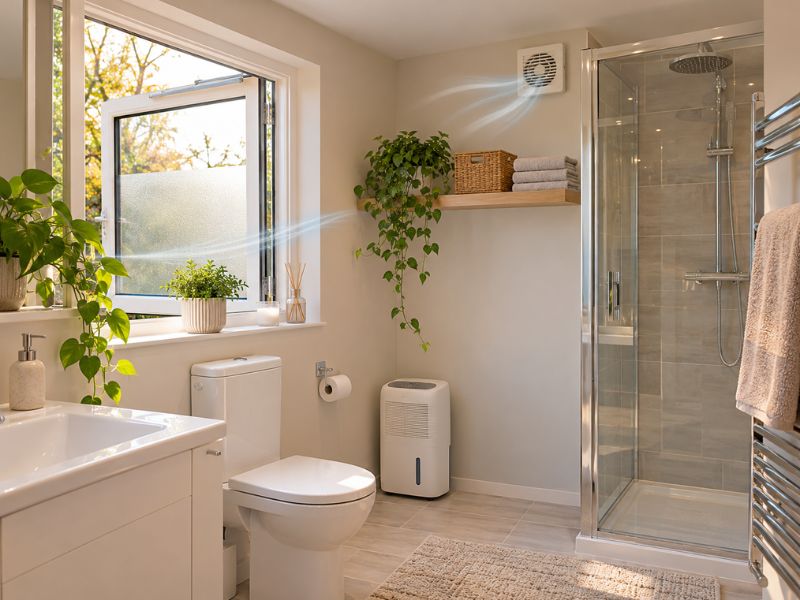
Aim to keep relative humidity between 40% and 60%. A cheap humidity meter shows your humidity levels. High humidity above 60% gives mould an easy start.
Keep the heating system on a steady low setting rather than short bursts, because warm walls collect less water. Try drying clothes outside or in a vented room with the door shut. Put lids on pans. Pull furniture a few centimetres away from the outside walls so air can move. Heavy curtains and blocked vents can trap moisture against a cold window.
These simple habits reduce condensation without any building work. To treat condensation, fix the moisture and the heat first. Wiping the stain is only half the job. Most condensation problems ease once the air moves.
Treat mould early. Wear gloves and a mask, and open a window. Wipe small patches with a damp cloth and a mould cleaner. Do not dry brush, because that sends mould spores into the air. Dry the area afterwards.
Cleaning visible mould without fixing the moisture source lets it return, because mould growth follows the water. A patch of mould damp on a bedroom wall is a sign the room needs more air and more heat. Large patches, repeat patches and mould in a child’s room are better left to a pro. Mould removal works best when the cause is fixed first.
All prices below are a rough guide, and the actual cost varies by property, area and the work needed. We averaged figures from several UK cost guides published in 2026.
A ventilation-led fix for condensation averages around £700 across three UK guides. A new bathroom extractor fan, fitted, averages around £255. Replacing an existing one averages around £175. Next to damp repairs, these are small bills.
Chemical injection for a damp-proof course averages around £73 per metre of wall, for the injection only. Quotes in the guides ranged from about £25 to £120 per metre. A full rising damp treatment on a typical house, including replastering, averages around £3,000.
Penetrating damp repairs average around £1,190, but the bill depends on the fault. Fixing leaking gutters is cheap. Re-rendering a wall is not. A damp survey averages around £260, and it is worth paying for before you buy any damp-proof course work.
Professional mould removal averages around £255 per room and around £950 for a whole-property job. Clean-up without a fix means paying twice.
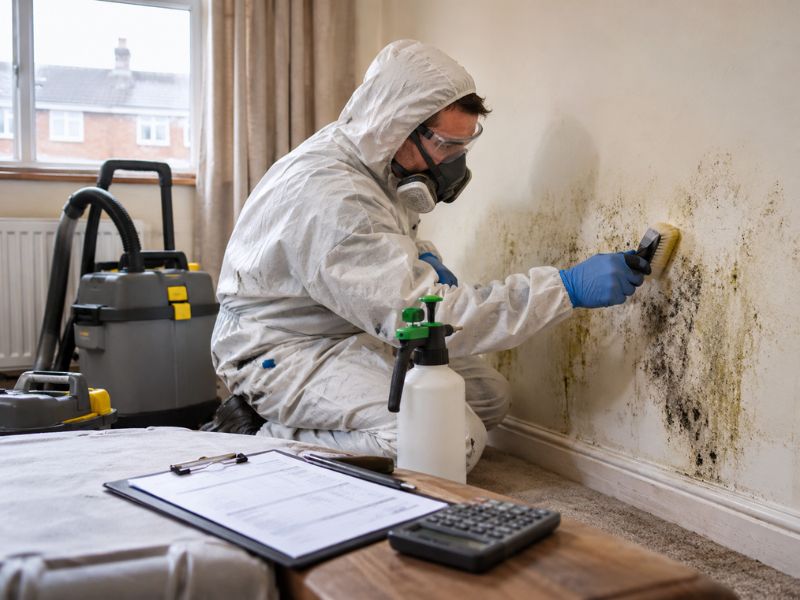
Call a damp specialist if damp patches keep returning, if tide marks appear, if a musty smell has no clear source, or if mould returns within weeks of cleaning. Get help sooner if damp issues are in a child’s bedroom or near someone with asthma.
A good damp specialist will also tell you when no treatment is needed.
Work out whether the water is on the wall or in it. Fix the source. Then clean the mould, in that order. If you rent, report damp and mould in writing. If anyone at home feels unwell, speak to a GP.
Mould is the sign. Damp or condensation is the cause. Fix the cause, and the mould has nothing to feed on.