We’re the UK’s Go-To Cleaning Company
High-Standard Cleaning with Compassion and Care.
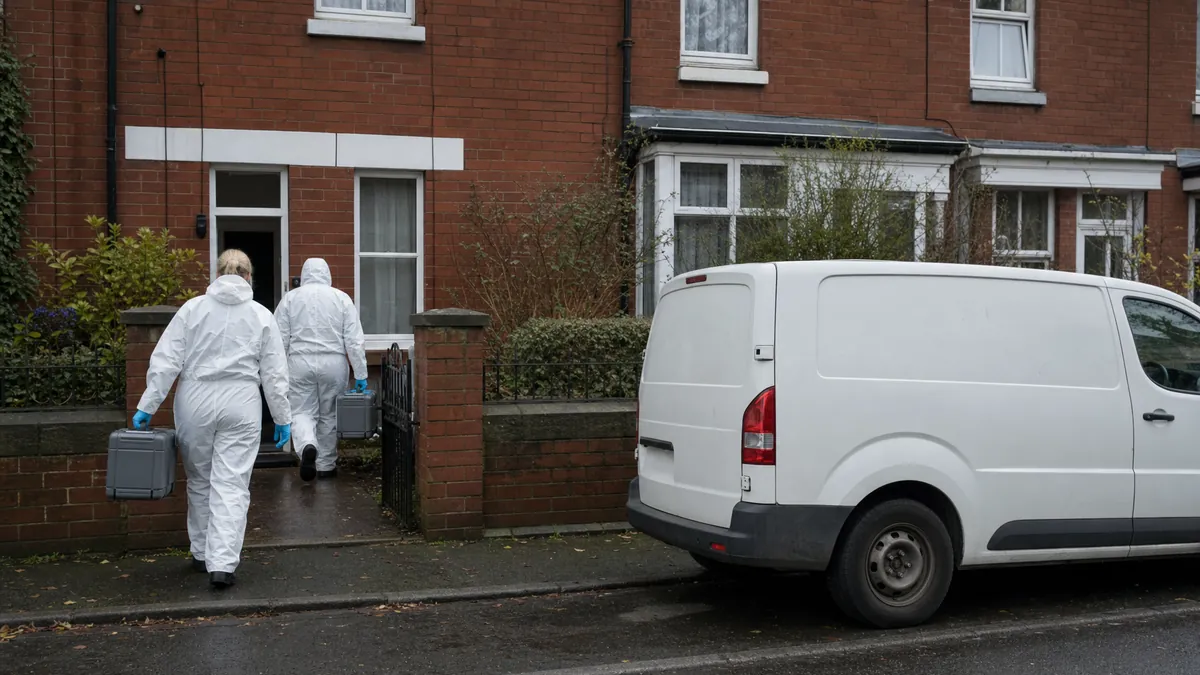
Police do not clean crime scenes. Officers and crime scene investigators collect evidence, then hand the property back. After that, the property owner, landlord or business books a professional cleaning company to do the clean up. Neither police nor other emergency services do the cleaning. Councils handle clean up in public areas, such as crime scenes on streets or in parks.
So who cleans crime scenes? Trained crime scene cleaning specialists do. We wear personal protective equipment, remove blood, bodily fluids and other biological materials, disinfect every affected area and take the waste away under strict rules. We start only when the police say we can go in.
Insurance often pays for crime scene cleaning, but not always. Check your policy for trauma or biohazard cover before you pay anyone.
That is the short version. Now for the full picture.
No. TV makes people think otherwise, and we hear this question about crime scenes all the time.
Police and forensic teams work out what happened. They photograph crime scenes, take samples, dust for fingerprints and bag evidence. They keep the place secure so nothing gets lost. When they finish, they release the property. That is where their job ends and ours starts.
Forensic investigators and cleaners do very different work. Forensic investigators find and record evidence. Crime scene cleaning is about removing contamination and putting the property right. We never touch crime scenes before they are released, because early cleaning can wreck evidence and harm a case.
A Freedom of Information response from Cleveland Police in 2025 showed the force arranged just six professional cleaning jobs after forensic work between January 2020 and the date of its reply. That was one in 2020, one in 2021, two in 2022 and two in 2024. None in 2023.
The total spend was £3,084. That is about £514 a job. These are real police figures, not a guess at what a private clean up costs. They show how rarely a force pays for crime scene cleaning. Practice differs between forces, so never assume the police will cover it.
In most cases, the owner arranges it. Where the incident happened decides who that is. Crime scene cleaning is done by independent firms, not by the police. Any company that cleans crime scenes should be trained, insured and licensed to move waste.
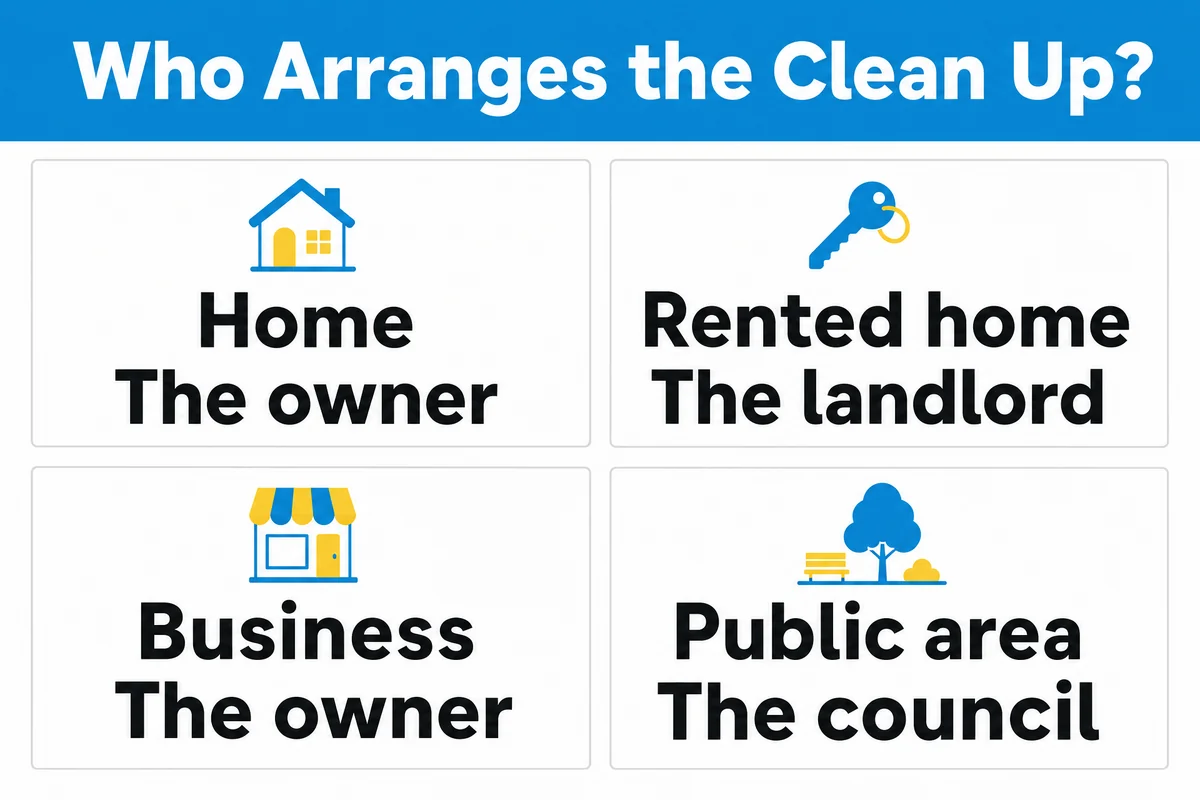
When crime scenes are at a private home, the occupier or the owner arranges the work. In a rented flat or house, the landlord normally steps in. Housing associations and councils do the same for crime scenes in their own homes. Property owners often feel this is unfair at the worst moment of their lives. It is how the system works, so we guide people through crime scene cleanup every week.
Crime scenes in shops, offices, pubs and other commercial premises fall to the business owner or the premises manager. In public areas such as streets and parks, the council or the body that runs the land usually deals with them. We also work for commercial clients such as housing providers and property managers who need crime scenes made safe quickly.
Crime scenes are only part of it. Our trauma cleaning services also cover sudden and accidental deaths, which are not crime scenes in the legal sense. Emergency services attend most of these incidents, but they do not clean up afterwards. The most common jobs include:
Forensic cleaning is the part of crime scene cleaning done after the forensic work is finished. Some firms call their teams forensic cleaners. They deal with fingerprint powder, chemical residue and biological contamination left once the investigators leave.
The word forensic does not mean we investigate anything. It means we work at crime scenes that have already been through an investigation.
Trauma scene cleaning is the wider term. A trauma scene is any place where a traumatic event has left behind blood or other contamination. It can be a bedroom, a bathroom or a car. It does not need a crime. A sudden death at home counts. So does a serious accident. Every trauma scene gets a risk assessment before work starts. The cleaning work is almost the same as crime scene cleaning. The paperwork can differ, and that matters when you claim on insurance.
Only after the police formally hand the property back. Crime scenes stay closed until the police sign them off, and we follow that rule on every job.
The wait changes from case to case. A sudden death with nothing suspicious can be released quickly. Serious violent crime scenes can take longer, as investigators may need to go back. The police decide the timing, and we work around it.
Once you have the release, call as soon as you can. Blood and body fluids get harder to treat the longer they sit, and smells spread through porous materials. Waiting also adds health risks for anyone in the building. Good crime scene cleaning services answer emergency calls at any hour. A fast emergency response limits the damage. The emergency services have already done their part, so the property is safe to enter. Now it needs a different kind of help.
Every job is different. The cleaning process still follows the same order at all crime scenes. It can take a few hours or several days, depending on the damage.
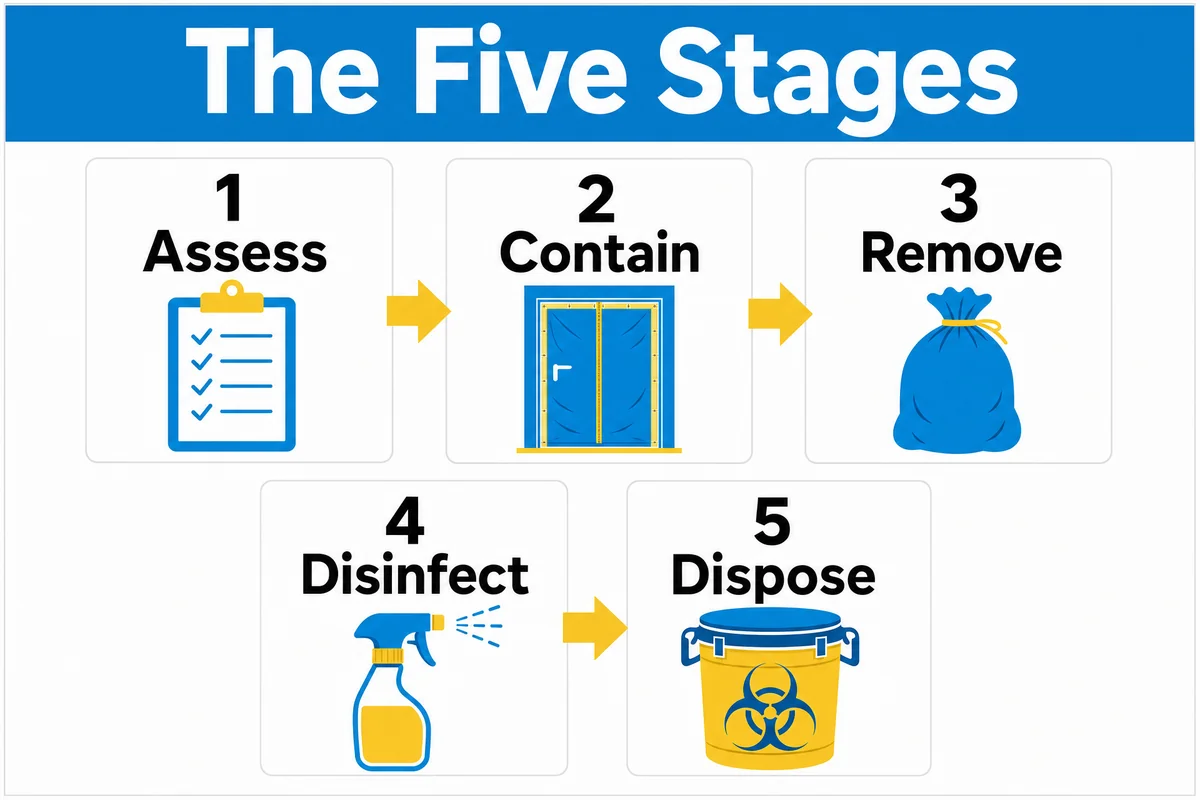
Before we touch anything, we walk the site and write a risk assessment. We look for blood and bodily fluids, sharps, broken glass, chemicals and anything else that could hurt the team. Then we put on full personal protective equipment. That means a suit, double gloves, boots, eye protection and a respirator.
We follow strict health and safety procedures from the first minute of any crime scene cleaning job. UK health and safety regulations, including COSHH, set the rules for this kind of work. Professional equipment and training are not optional here. Professional crime scene cleaners work in sealed suits for good reason.
We split the property into zones. Zone containment stops germs travelling from contaminated areas into clean rooms on boots, kit or tools. It keeps the affected area small and protects everyone else in the building.
This is the careful removal stage, and it means taking out blood, bodily fluids and soaked materials. We lift blood spills, tissue and other biological materials, plus carpet, underlay and mattresses. We pick up needles and broken glass with the right tools and put them in sharps containers. This is biohazard removal, and it is the part no household cleaner can do safely.
Specialist equipment includes HEPA vacuums, extraction tools and sealed containers. Specialised equipment like this is what lets bioremediation specialists clean what the eye cannot see.
Next, we clean and disinfect every surface that blood or fluids could have reached. Industrial-grade disinfectants kill harmful pathogens that normal products miss. This level of deep cleaning also covers hidden spots such as skirting boards, floor edges and furniture joints.
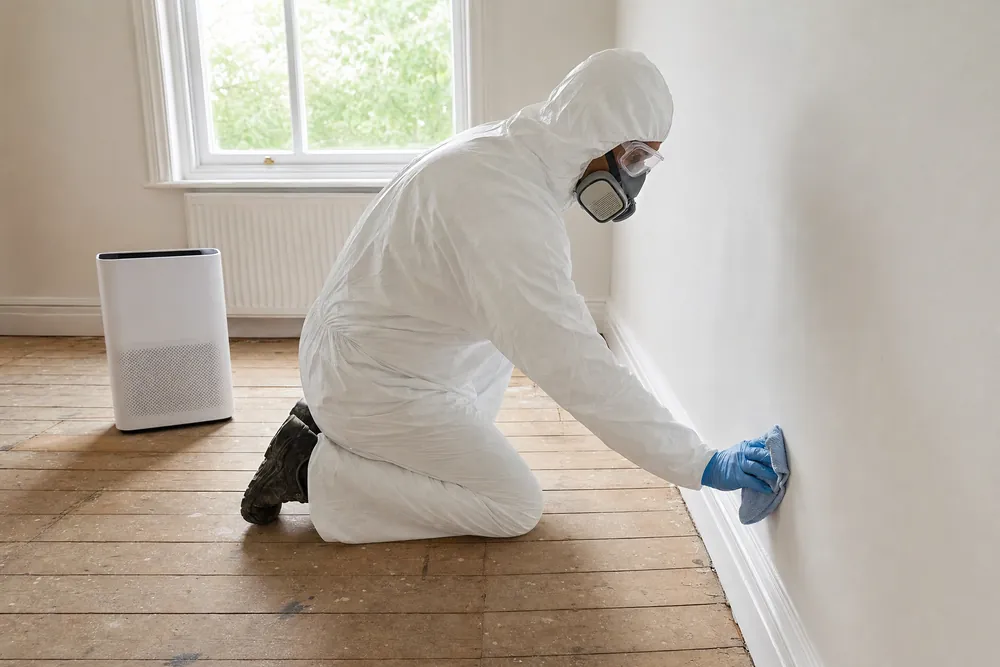
Smells are a problem in their own right. Ozone and hydroxyl machines break down odours at the source, so lingering smells do not return a week later.
Waste from crime scenes does not go in the bin. Packing biohazardous materials takes care. Blood-soaked items, used protective clothing and other debris are packed, labelled and removed by a licensed carrier. Official environmental guidance in England recognises that crime scene clean-up can produce healthcare-related waste. Depending on what it contains, that biohazard waste may count as hazardous waste and need controlled disposal with paperwork. Handling hazardous materials safely is a legal duty in crime scene cleaning, not a nice extra.
We photograph the work and log what we removed. A final inspection checks that the area is clean and safely restored. We plan every one of our clean up operations to minimise disruption for neighbours, staff and family. The aim is restoring safety so people can live or work there again in a clean environment.
We check each item from crime scenes one by one.
Hard, non-porous things such as glass, metal and sealed wood can often be cleaned and kept. Porous items soak up bodily fluids. Mattresses, carpets, rugs and soft furnishings are rarely safe to save, and they usually go as hazardous waste.
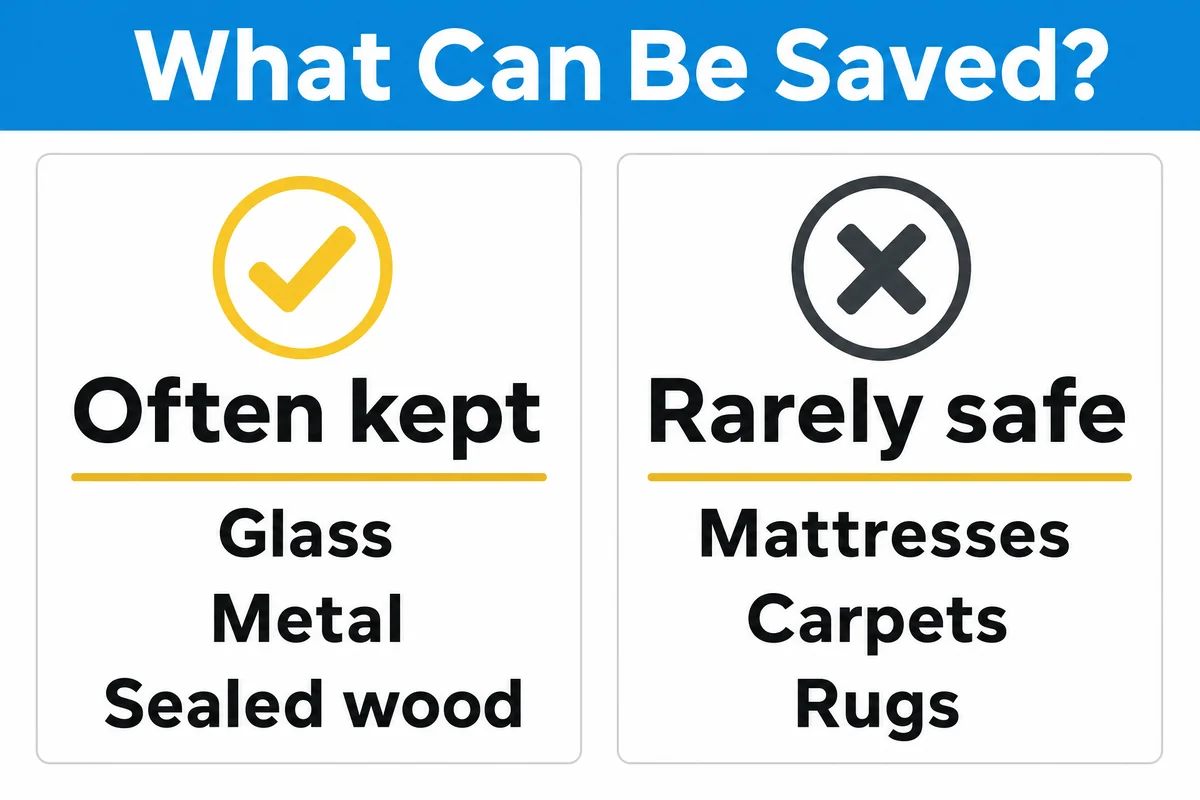
Valuable or sentimental items need a conversation. We talk to the owner or family first, photograph the item and write it on a list. That list also helps when you make an insurance claim.
Blood looks simple to clean. It is not.
Crime scenes hold more risk than they show. Human blood, bodily fluids and tissue can carry bloodborne pathogens such as hepatitis B, hepatitis C and HIV, as well as other potentially infectious materials. These harmful bloodborne pathogens cause infectious diseases that can pass on through cuts or splashes. UK workplace safety guidance says bloodborne viruses can stay a risk on contaminated surfaces for extended periods under the right conditions. Wiping up what you can see does not make a room safe.
Blood and other bodily fluids seep into porous materials, floor gaps and hidden spaces. Untrained people can spread them from room to room on shoes and cloths. That cross-contamination can put your family at risk of serious infections. Household cleaners do not kill everything, and they can leave permanent stains or damage floors.
There are other health hazards too. Needles and sharp objects are listed as risks in UK health and safety guidance. The health risks are real, and if you are grieving, you should not take them on as well. Specialised cleaning is not the same as household cleaning. Professional cleaners use the right kit, and professional crime scene cleaning protects public health as well as your own, because contaminated waste never reaches household bins.
Discretion matters as much as cleaning skill. Crime scene cleaning is personal work. After a traumatic event, families and businesses often fear that neighbours or the press will find out.
We keep the details of crime scenes and every job confidential. We tell you in advance how we will arrive and who will be on site. We do not discuss the work with anyone outside the people you approve. Records go to the owner, and to the insurer only with your consent.
Respect for victims' families is part of working at crime scenes. Our team treats the property as someone's home, because that is what it is.
Sometimes. Cover for crime scenes depends on the policy and the cause of the loss.
Buildings, contents, landlord and commercial property policies can all include trauma or biohazard cleaning. Many crime scene cleaning services will liaise with your insurer. Look for words such as trauma cleaning, biohazard remediation, unattended death cleaning and crime scene restoration in your policy wording. Some firms list it under extra cover or home emergency cover.
You will usually pay the policy excess first, and many home policies set that between £100 and £500. A policy may also cap the amount it pays. A low cap might not stretch to a large property or a severe incident. Ask your insurer before work starts, and keep every receipt.
Insurers want proof of what happened and what was done. Property owners should expect a full record of the cleaning process. A professional company should give you:
The price of cleaning crime scenes depends on the damage. We averaged four published UK figures. Two came from trauma cleaning firms, one from a UK trades directory cost guide and one from a UK biohazard company's price page.
The first source gave an average of £1,900 with a range of £300 to £3,500. The second gave an average of £3,500. The third said £1,000 to £5,000 or more, a midpoint of £3,000. The fourth said £500 to £1,500 for one contained room, a midpoint of £1,000. Together, that makes an average of about £2,350.
Please treat that price as a rough guide, because the actual cost varies. Several things push it up or down. The main ones are how many rooms the incident touched, how long the scene sat before anyone found it, and whether blood reached carpets, floorboards or plaster. The amount of waste and whether the work happens at night or at short notice also change the bill.
Unattended deaths cost more when decomposition has spread. One UK firm puts a recent death with little contamination at £500 to £1,500, and extended cases at £3,000 to £5,000 or more. Quotes vary by firm and region, so ask crime scene cleaning services for a written estimate before work begins.
The role does not usually need a university degree. It does need specialist training.
Good crime scene cleaners learn how to handle biological hazards, use personal protective equipment, control waste and follow safety regulations. A UK national occupational standard exists for working at and cleaning a biohazard scene. It starts with assessing the risks of the site. Many employers also run background checks before someone joins, because cleaners enter homes at sensitive times. Safety qualifications and specialist knowledge matter more than a classroom certificate.
The human side counts just as much. People who work at crime scenes see upsetting things, so they need emotional resilience and psychological preparedness. They also need empathy, compassion and discretion when they deal with grieving relatives. Not everyone can work at crime scenes, and that is fine.
These numbers explain the demand for crime scene cleaning. They do not show how many crime scenes get cleaned, because no reliable national figure exists for that.
England and Wales recorded 696 homicide cases in 2022. Police then recorded 512 homicides in the year ending June 2026, a 1% fall. Police also recorded 48,615 offences involving knives or sharp instruments in that period, down 6% on the year before.
The Crime Survey for England and Wales estimated 939,000 incidents of violence in the year ending June 2026, and 656,000 incidents of criminal damage. Only a small share of these would ever need biohazard cleaning.
Deaths matter too. England and Wales registered 570,988 deaths in 2025. Coroners received about 147,800 reports, which is around 26% of registered deaths, and ordered roughly 75,900 post-mortem examinations. Most of those homes never need specialist help. Some do, mainly after unexpected deaths in a property.
Call once the police have released the scene. Do not wait, and do not try to do it yourself. Property owners who act fast limit the damage.
At Scrubbed With Love, we work with families, landlords and businesses who have just been handed a property back and do not know where to start. Crime scene cleaning is a specialist service, not a bigger version of home cleaning. When you compare crime scene cleaning services, ask about training, insurance, waste carrier licences and what paperwork you will get. Ask how quick their emergency response is, too. Those answers tell you a lot.