We’re the UK’s Go-To Cleaning Company
High-Standard Cleaning with Compassion and Care.
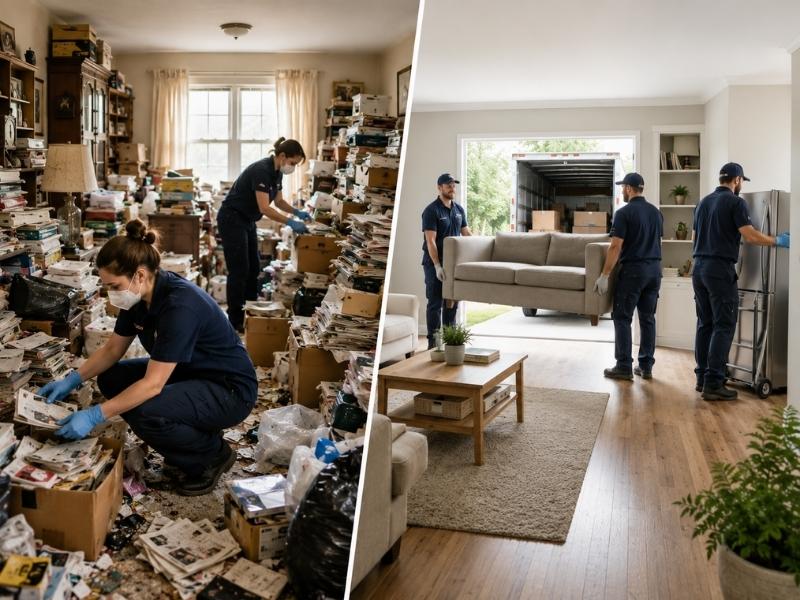
House clearance and hoarder cleaning get used as if they mean the same thing, but hoarder cleaning versus house clearance comes down to scale and safety. A standard clearance removes unwanted items from a property, usually for a move, a downsize, or a bereavement. Hoarder cleaning covers that work but adds deep cleaning, sanitisation, and often biohazard removal, since a hoarder's home usually comes with damp, pests, and risks a normal clearance never faces. If you only need boxes and furniture taken away, a simple clearance is enough. If mould, rubbish, or animal mess has built up, you need a hoarder cleaning service instead.
A standard clearance is a removal job first and foremost. The goal is to empty a property of unwanted belongings and get it ready for a sale, a new tenant, or a fresh start. It usually does not involve specialist cleaning unless you ask for it. This kind of job is quicker and simpler than a hoarder house clearance, since there is no health hazard to manage.
Most cluttered house clearance jobs remove a fairly small volume of possessions compared with a hoarding cleaning job. A typical UK clearance job is often completed within a single day, taking eight to fourteen hours for an average three-bedroom home. Larger properties, or ones with more storage areas full of boxes, take longer.

Hoarder cleaning covers everything a standard clearance does, then adds work a normal clearance was never built for: deep cleaning, sanitisation, odour removal, and often biohazard removal, carried out by cleaning specialists rather than a general removal crew. It's a professional hoarder cleaning service rather than a simple removal job, since the property needs to be made safe again, not just emptied of things nobody wants.
Severe hoarding cases can involve the removal of dozens of cubic metres of belongings, far more than a normal property clearance would deal with. A hoarder's house left for years often needs a closer look at the structure, since damp, pest damage, or the weight of stored items can cause real structural damage over time. A hoarding cleaning job of this size rarely finishes in one visit. The aim by the end is a living space that feels normal again, not just a property with fewer boxes in it.
Specialist hoarder cleaning teams use personal protective equipment, commercial-grade disinfectants, and specialist tools that a routine clearance job would not require, dealing with mould, pest infestations, human or animal waste, spoiled food, sharps, and contaminated materials. Food waste left for long periods can become a health risk on its own, attracting flies and rodents before anyone arrives to clean.
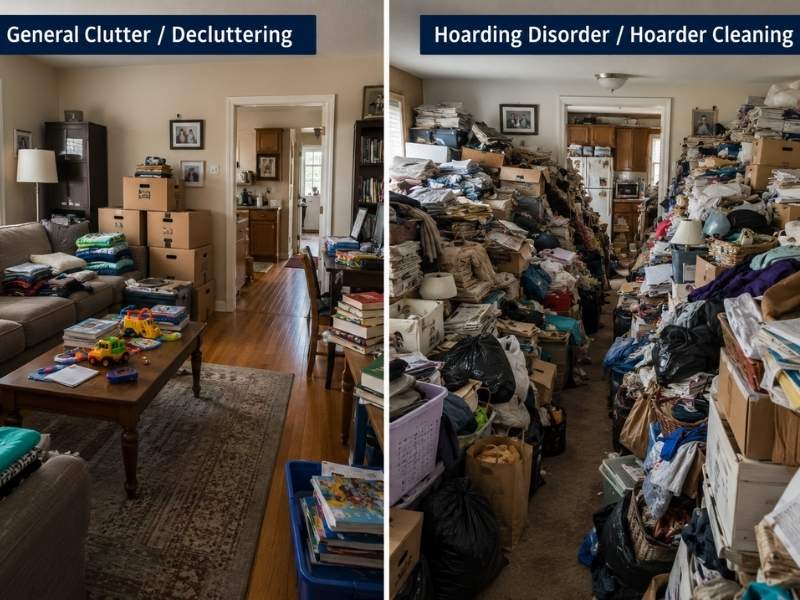
It's worth saying clearly that a messy house is not automatically a hoarding case. General clutter from a busy family, a big move, or years of not getting round to the loft is normal, and decluttering services can usually sort that out in one or two days without any hazard to manage. This highlights the difference in hoarder cleaning vs decluttering. Decluttering services focus on general clutter rather than the deeper cleaning work a hoarding job needs.
Hoarding disorder is different. It involves a persistent difficulty discarding possessions regardless of their value, building over months or years rather than being a one-off mess. Compulsive hoarding often develops slowly, so family members rarely notice it until a property reaches crisis point. That is the line between a general clutter job and a hoarding cleaning job, and why the right service depends on what is actually happening in the property. In more severe cases, it can cut off access to the kitchen, bathroom, or a bedroom, making daily life harder to manage.
Hoarding disorder affects an estimated 2.5% to 6% of the UK population, roughly 1.7 million to 4 million people, with some estimates as high as 4.1 million. It can affect people of any age, background, or income level across the UK population, not just older adults living alone. Only around 5% of people affected are thought to seek professional help, part of why so many compulsive hoarding cases are only picked up once a property has reached a serious point.
Because hoarding disorder is a recognised mental health condition, many hoarder cleaning projects involve mental health professionals, social workers, housing officers, and fire services rather than a cleaning team turning up alone. Emotional attachment to belongings is often what makes clearing hard, and the emotional challenges involved are just as real as the physical work. A trauma-informed, sensitive approach gets far better results than stripping a house bare, so we treat every hoarding situation with a sensitive approach and complete confidentiality, since it can be a life-changing moment for the family member involved.
UK fire services identify heavily cluttered homes as carrying a much higher fire risk and a range of safety hazards well before a property reaches the extreme end of the scale. Excessive belongings create blocked exits, cause other fire hazards, and slow emergency access during a crisis. Some UK fire services report hoarding-related fires up around 75 to 80% since 2020, and figures suggest hoarding behaviours are involved in around 14% of fatal fires in the UK. Thousands of hoarded homes have been flagged as high risk because of severe hoarding, so early professional help matters. In extreme cases, a blocked exit can turn a small fire into a life-threatening event.
Many UK councils and housing providers use clutter rating systems to judge how severe a hoarding situation is and what level of help is needed. Local authorities may step in when a property reaches unsafe living conditions, particularly where fire hazards, pest problems, or structural damage are involved. Housing associations increasingly train staff to spot early signs of hoarding, so support can start before a home becomes unsafe, since early intervention is far cheaper than a full hoarder cleaning job and lowers the safety risks.
Beyond the volume of possessions, hoarded properties often carry health hazards not obvious from outside. Mould growth is common where poor ventilation meets damp and clutter, and rodent droppings in hoarded homes carry a real health risk. Pest infestations, decomposed food, and animal mess can turn a property into a breeding ground for bacteria and disease. These are some of the signs a cluttered home has become a health or biohazard risk. These health hazards mean a hoarder's home needs a proper deep clean and disinfection for a genuinely healthy living environment. Left untreated, a hoarder's house can reach a point where hoarded properties need repairs to the building.
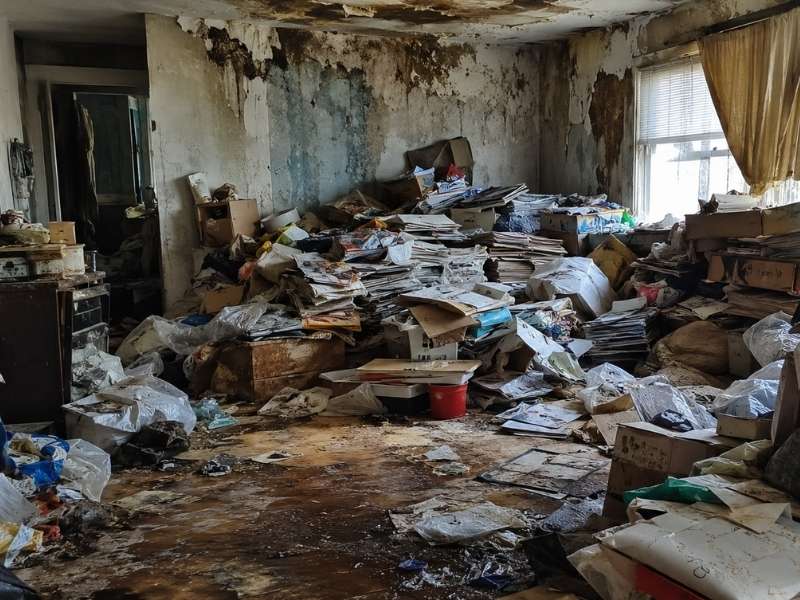
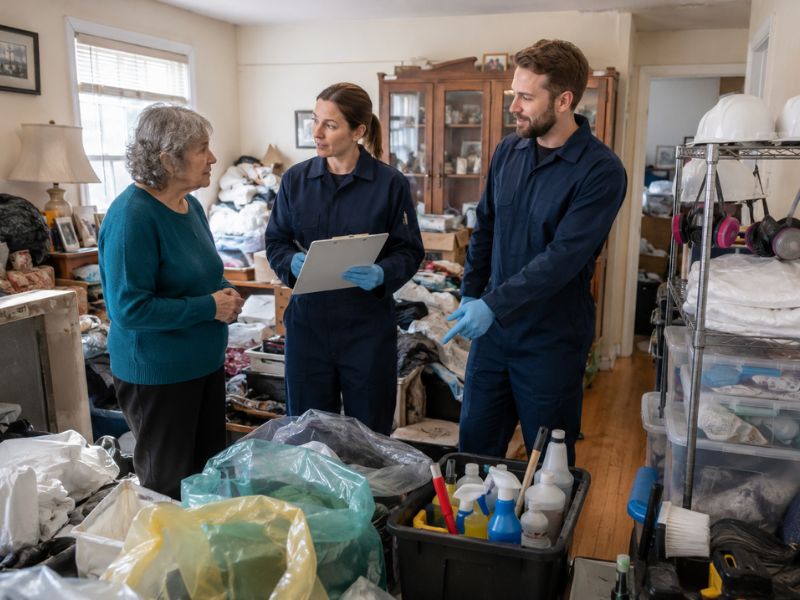
Before any hoarder cleaning work begins, a proper consultation and risk assessment happens first, identifying hazards such as blocked doorways, damp, or biohazard material, and building a step-by-step process for the job. At Scrubbed With Love, this decides everything else: days needed, protective equipment required, and whether valuable items or possessions should be set aside rather than thrown away with the clutter. An experienced team doing this properly saves problems later, and it's also when we talk through a free quote so there are no surprises.
Prices vary between companies and regions. The average cost of a full house clearance sits between £450 and £650 for a typical property. Smaller jobs, such as one room or a small flat, often start from around £175 to £325, while a full three or four bedroom clearance can run from £600 up to £1,500 or more, depending on volume and location. London and the South East sit at the higher end, often £750 or more for a typical three-bedroom property.
The price is a rough guide, and the actual cost will vary depending on the size of the home, how much needs to be removed, and access to the building.
Hoarder cleaning costs more than a standard clearance because of the deep cleaning, sanitisation, and specialist handling involved. Moderate hoarder cleaning jobs average between £2,000 and £8,000, with many sources landing on a typical figure of around £3,500 to £4,000 for a straightforward job with no structural damage. Smaller jobs can start from around £500 to £1,000, while severe cases involving contamination, pest infestations, or structural repairs can run from £10,000 up to £25,000 or more.
As with property clearance, the price is a rough guide and actual cost varies depending on the state of the hoarder's house, the amount of waste, and whether restoration work is needed to restore properties to a liveable condition. This is why there is no single answer to how much does hoarder cleaning cost in Liverpool, as every property requires an individual assessment.
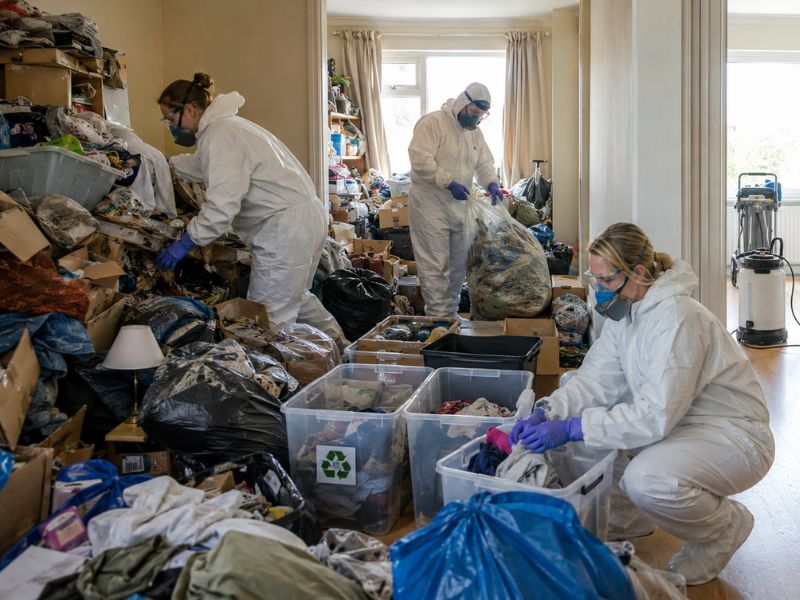
A standard clearance is usually a one-day job, though larger properties can take longer. General decluttering, where there is no hazard to manage, is often finished in one to two days. Hoarder cleaning typically takes one to five days for a moderate job, while severe cases can take several days or weeks, particularly where structural repairs or restoration work are needed.
Waste removal from any property must follow UK environmental rules, which matters even more with the volume in a hoarder house clearance. Waste removal on this scale is rarely as simple as bags out for collection. Anyone transporting waste commercially must be a registered waste carrier, and householders must dispose of it legally, since fly-tipped waste can lead to fines even if a third party dumped it. England recorded 1.26 million fly-tipping incidents in 2024/25, and 62% involved household waste, which is why a waste removal partner with the right licences and a fully insured service matters when clearing a property.
Where a property belonged to someone who has passed away, legal permission may be needed before the home can be cleared, particularly if probate has not been settled. This is one reason a clearance after a bereavement needs more care than a standard move, and another reason waste carriers need to be properly registered rather than cheap.
Forced clearance alone rarely fixes hoarding behaviours long term. Without ongoing support, clutter often comes back within months, and the same excess items build up again in the same living space. Many organisations, including local authorities and housing providers, favour a person-centred approach that combines the clean with ongoing support, rather than a one-off fix to stop hoarding for good.
Modern hoarder cleaning focuses on creating a safe, liveable home while supporting the person to maintain it, rather than just removing belongings in one visit, which matters both for the person living there and for anyone hoping to stop hoarding turning into serious issues again down the line.
Not every cleaning company can handle a hoarding case. Check whether a cleaning service carries the insurance, training, and waste licences needed for a hoarder clean, and offers clear pricing after seeing the property rather than quoting blind. A trustworthy cleaning service will explain what happens to the waste it removes.
Decluttering services and general cleaning service listings often sit side by side online, making it easy to book the wrong help. Ask whether the team offers decluttering services alone, or includes deep cleaning and biohazard removal. If your property needs more than a standard clean, look for a professional hoarder cleaning service with experience in hoarding cases, since a good cleaning service works with the person, not just the property.
If you are clearing a property because of a move, a sale, downsizing, or a bereavement, and there's no hazard to manage, that's the right service, quicker, cheaper, and focused purely on removal work.
If the property involves unsafe living conditions, blocked exits, pest problems, unpleasant odours, or any sign of a hoarding situation, a hoarder cleaning service is the better fit, since it covers the deep cleaning and safety work a standard clearance was never built to handle.
Many clients feel overwhelmed by the state of a property before anyone arrives, and that's normal. Some feel overwhelming pressure from family to sort a property quickly, which adds to the stress. A proper assessment, a clear step-by-step process, and a free quote before any work begins should tell you which service you need and what it's likely to cost.