We’re the UK’s Go-To Cleaning Company
High-Standard Cleaning with Compassion and Care.
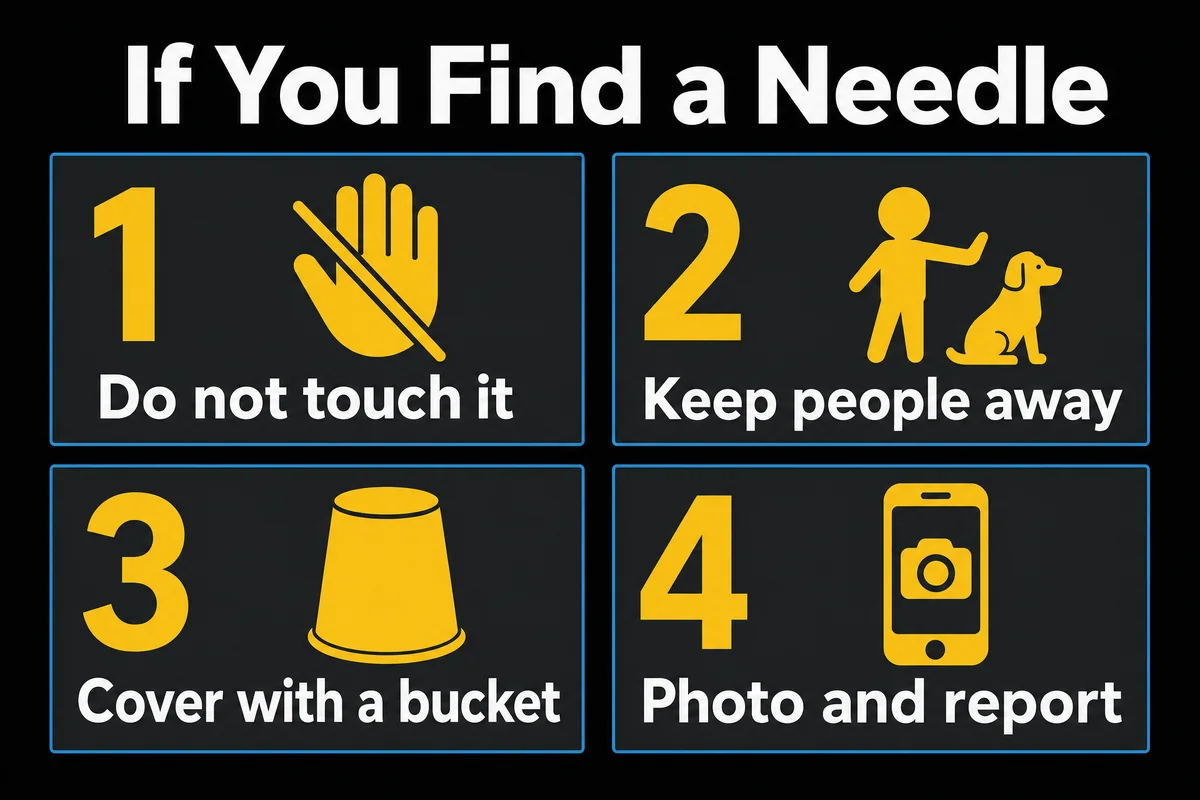
Do not touch it. Do not move it. Keep children and pets away, and if you can do it without going near the needle, cover it with a heavy plastic bucket. Take a photo and report the exact location. On public land, your local authority deals with it. On private property, the owner is responsible, so that means you if you own the place or your landlord if you rent. If you have been pricked, wash the wound and get urgent medical advice straight away.
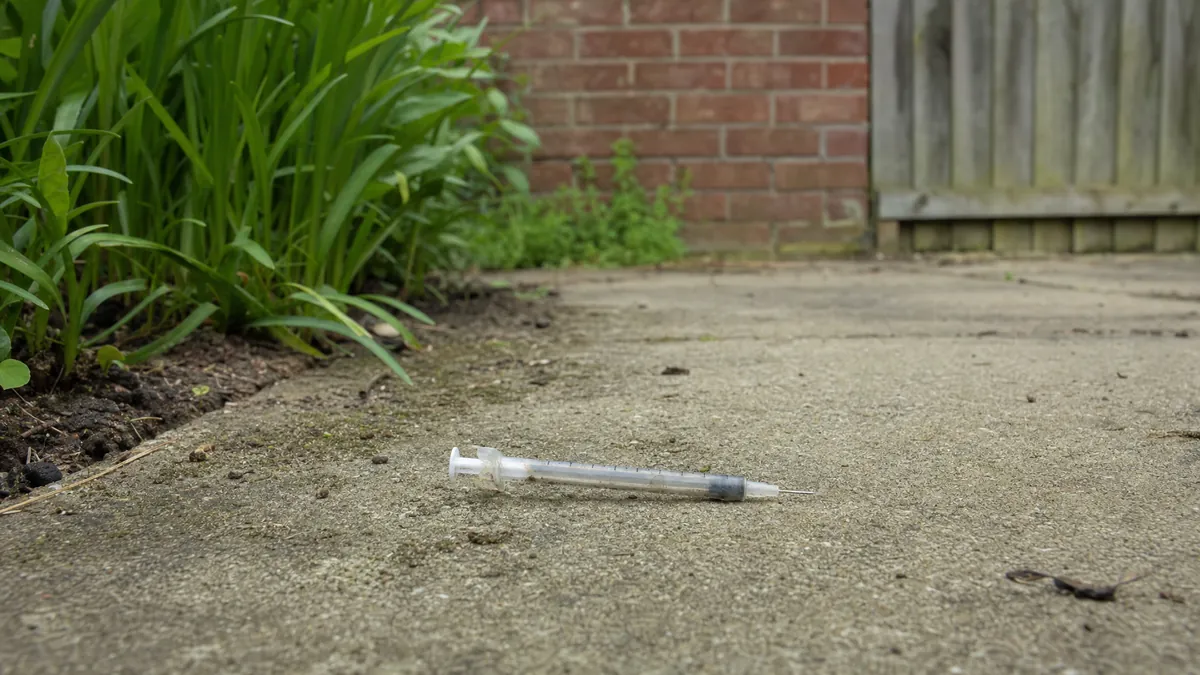
Finding discarded needles on a path, in a flowerbed or by the bins is a shock. Stay calm. Needles and syringes turn up in car parks, alleys, gardens and doorways, so you are not the first person this has happened to. Most of the time nothing bad happens, as long as nobody touches them. Here is how we handle discarded needles and syringes at Scrubbed With Love, one step at a time.
Treat every needle as hazardous, even one that looks clean. Blood can sit inside used needles and you cannot see it. A needle can carry a virus without looking dirty at all. Gloves will not save you either, because a needle goes straight through them. Old needles and bent needles carry the same risk as fresh ones. Councils advise you to leave them alone.
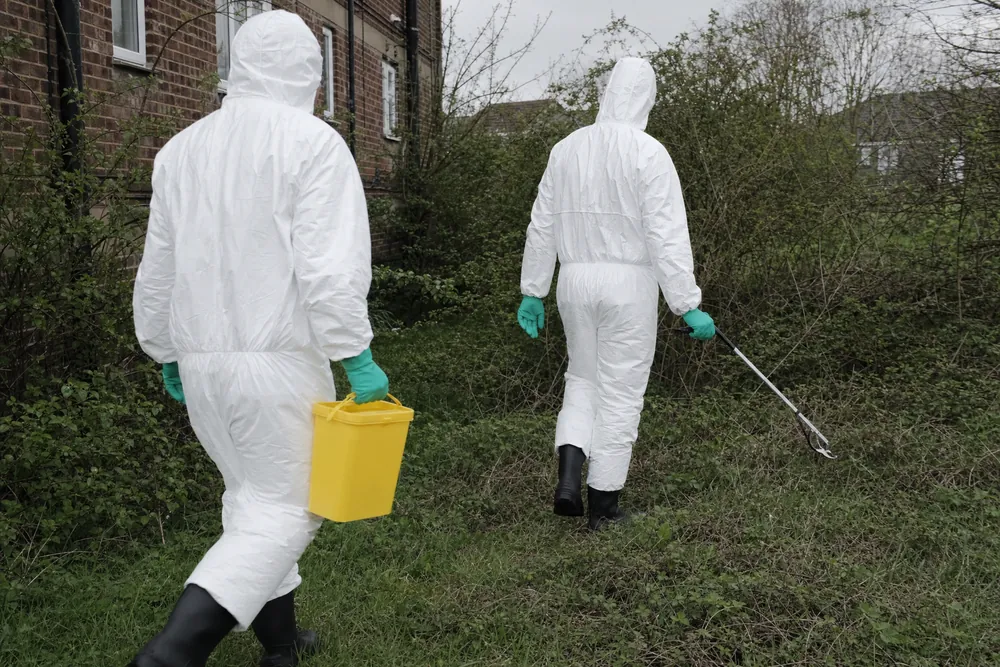
Never try to put the cap back on. That is how most people get stuck. We use long pliers made for the job and a rigid container, and we have trained for it. We pick up needles one at a time with the sharp end facing away from us. Each one goes into a sealed sharps container with a locking lid. Kitchen pliers and tweezers are not a safe swap. If anyone has to handle needles safely, that is a job for trained people with the right equipment, not a quick grab with a sandwich bag.
Do not assume the needle came from drug use. People also use needles and syringes to inject medication such as insulin, and some people take fertility or hormone medication this way. A needle that looks old or clean should still be treated as hazardous, whatever its source.
Keep children and pets away from the area until the needle is gone. Tell your neighbours if it sits in a shared garden or on a path other people use. Look around for other needles nearby, but do it from a distance.
Cover it with a bucket or a thick plastic tub, and do it without touching the needle. Lower the tub over the needles from above and do not slide it. That tub is a container the needle cannot poke through, so it protects the next person who walks by. Put a brick on top so the container cannot be knocked over. A flimsy cardboard box is no use because the point goes straight through it. If a child finds one, teach them to leave it alone and tell an adult.
Take a photo from a safe distance. Then note a landmark, gate, street name or door number. The more exact your location, the faster the team finds it. Say so if there is a pile of rubbish or if you can see loose needles in more than one spot.
For example, a report that says "behind the red bin at the back of number 12" gets a quicker response than "somewhere in the garden". Some councils say they respond within two hours, and most within a few hours, when the needle is on public land. Say how many needles you can see and whether they are close together.
It comes down to whose ground it is. Public land is usually a council job. Private land is not.
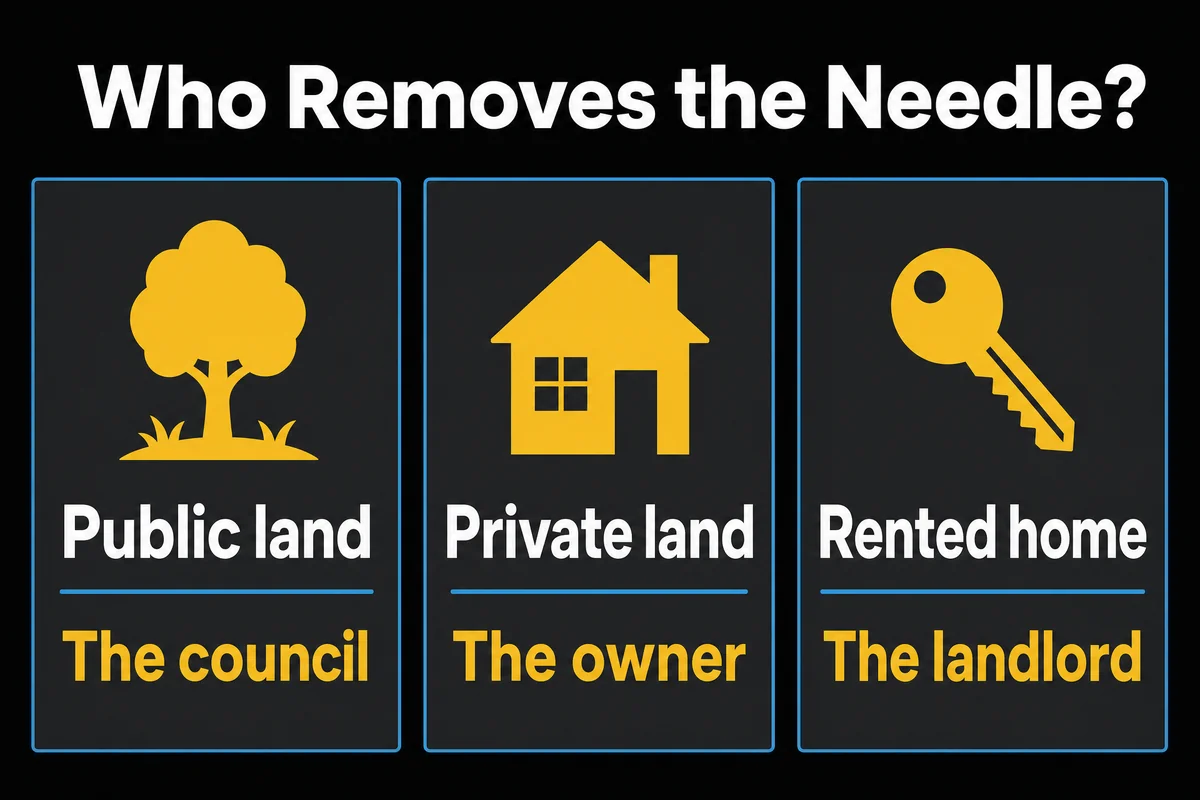
Councils arrange removal of discarded needles from a public place for free. That means streets, pavements, parks and council owned land. Council teams collect needles and syringes and safely dispose of them through clinical waste routes. Many councils say they will not remove needles and syringes from private gardens, houses or flats. Several say the landowner is responsible, and a few will arrange removal if you ask, sometimes for a fee. Ask before you pay anyone.
Some councils can also act against owners who let drug litter build up. Finding a needle is a council matter first, not necessarily a police matter. Council services vary a lot, so check your own council's page.
Rivers and canals are different. A canal is usually the job of the Canal and River Trust, and a river the Environment Agency.
If you rent privately, tell your landlord in writing and attach your photos. If you live in a council or housing association home, contact the housing team. If you own your home, ask your council first. If they cannot help, a private clinical waste firm can.
Businesses are usually the ones to deal with removal on their own premises. So are schools, nurseries and care homes. A landlord has good reason to act fast, because shared stairwells, gardens and empty flats are where needles often turn up. For example, a needle in a shared stairwell is usually a job for the managing agent. Check your tenancy and keep a record of every message.
We are cleaners, not clinicians. This section follows NHS guidance, and you should always speak to a healthcare professional about your own case. We advise you to treat any needle injury as urgent.
If a needle breaks your skin, do these things in order.
Keep the wound under running water for a few minutes. Let it bleed for a moment, because that helps flush it out. Use soap again if blood is still on the skin. Plain soap is all you need. Wash your hands too.
The risk of serious infection from a discarded needle is low. Injury from needles in the community is not common, and an infection is rare. But the risk is not zero, so you still need to be checked.
A needlestick injury can pass on blood borne viruses, and needles that carry blood are the usual route. The three main ones are hepatitis B, hepatitis C and HIV. Transmission depends on the circumstances, so an injury does not mean you are infected. Tetanus is also a risk with any contaminated puncture wound. A healthcare professional may check your tetanus and hepatitis B vaccination, and offer a booster or a first hepatitis B vaccination if you need one. Hepatitis B can be prevented this way.
The level of risk depends on a few things. How much blood was involved, whether the person who used the needle was infected, and how long ago it was used all play a part. Only infected blood can pass on a virus. For example, a bad puncture wound from a fresh needle is a higher risk than a scratch from a dry one. Fresh blood on a needle can also mean a higher risk of passing on a virus. Your healthcare professional decides which level you are, and if they judge you at low risk, you may need no treatment at all.
Here is some good news. Hepatitis C is a blood borne infection, and the numbers are falling. UKHSA estimated that around 50,200 adults in England were living with chronic hepatitis C in 2024. In 2015 it was 129,000, so that is a fall of 61.1%. Among people who inject drugs, 5.2% had it in 2024, down from 28.6% in 2015. It can also be cured, and 81.5% of people diagnosed between 2015 and 2024 were recorded as starting treatment. Access to clean injecting equipment is part of how those numbers fell. The UK is aiming to end hepatitis C as a public health threat by 2030.
A needlestick injury can also leave you anxious and stressed while you wait to hear if you have an infection. That is normal. Tell your GP how you feel, because your mental health matters too.
If a healthcare professional thinks your HIV risk is high enough, you may be offered HIV post exposure prophylaxis. The medicine must start within 72 hours of the exposure, and the sooner the better. That is why we say get urgent medical advice on the same day. Waiting also raises your risk of infection if treatment is needed.
You will usually have blood tests for HIV and other viruses, and some people need follow up tests over the next few months.
One needle in a flowerbed needs a report and a safe pick up. Sometimes you need more than that.
A sweep is a trained team checking the whole area and clearing any other needles they find, not only the one you spotted. We would look at one in these cases.
Cleaners, grounds teams, waste collectors and security staff meet sharps at work too. That is why businesses and landlords often need a sweep in shared spaces. A sweep clears needles and syringes from places a resident would never think to check. A proper team handles collection and disposal through licensed clinical waste routes.
We looked at recent published prices from six UK providers and worked out the average. A small, straightforward job starts at about £245 on average, with starting prices ranging from £80 to £400. Larger or more contaminated sites average around £675, with prices running from about £500 to £950 and more. Some providers quote without VAT, and needle sweep services price by the job, not by the needle.
Please treat these as a rough guide. The price is not fixed and the actual cost varies with the size of the site, access, urgency, how many sharps there are and the level of contamination. A written quote after a site check is the fair way to price it.
Getting rid of a needle the wrong way creates a new risk for someone else. Safe disposal protects everyone down the line.
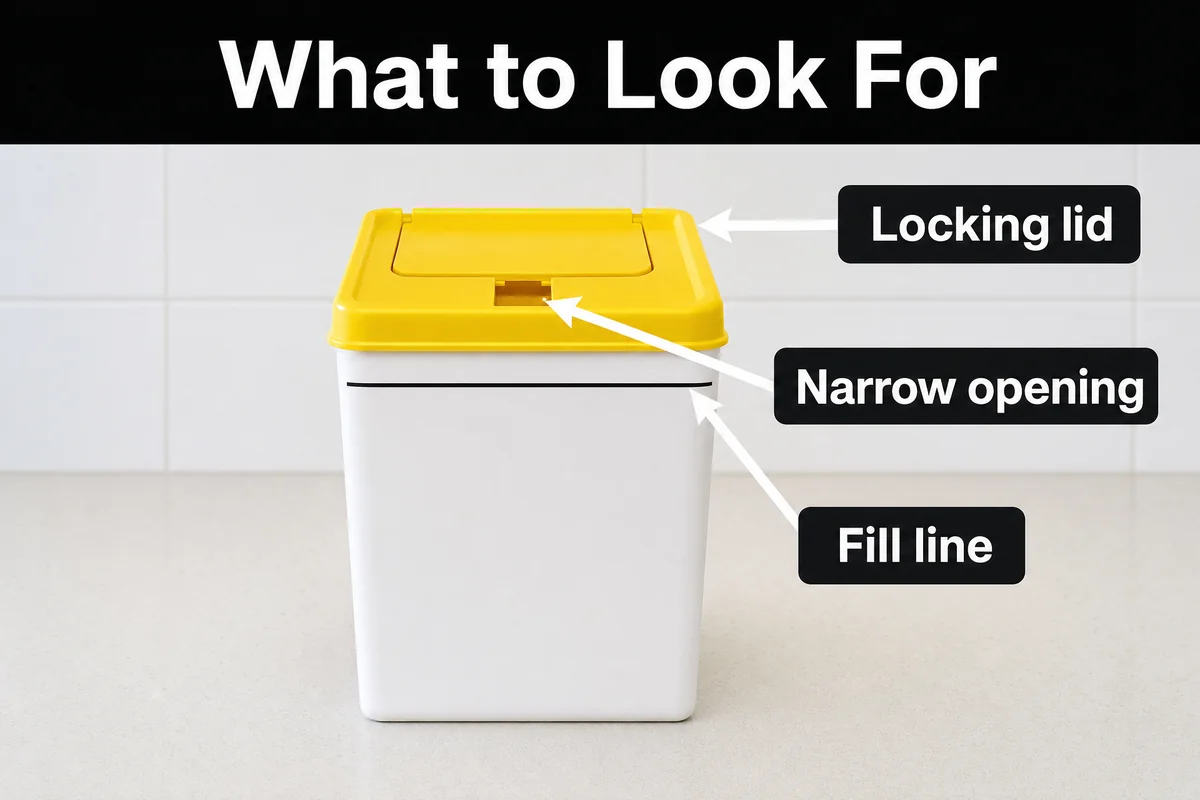
Safety starts with the right bin. Used needles and syringes must go into a sharps bin. If you use needles at home, put used needles in the bin straight after use, tip first, and never force them. A sharps bin is a container made to stop needles piercing the sides, so it has to be puncture resistant and clearly marked. A good container has a narrow opening, a locking lid and a fill line. In the UK, yellow lid bins are commonly used for contaminated needles. Check the lid is fitted before you start filling it.
Improper disposal can lead to serious health risks. Discarding sharps in a household bin puts refuse crews at risk of injury and infection, because a puncture injury can happen when the bag is crushed. Bin crews cannot see needles inside a bag. Safe handling at every stage protects the people who pick up your waste. Local councils often provide clinical waste collection services, so ask about a regular collection if you inject at home. A safe collection route is essential, and general rubbish is never one. Using the correct bin and the right route for disposal is what keeps people safe.
Do not put sharps in the recycling or the general bin. Never bend or snap needles, and do not squash syringes to make them fit. Never use a drinks bottle or food tin as a container, because needles can pierce the sides. Do not carry loose needles to a pharmacy or surgery, because pharmacies usually take sealed bins from people they supply, not needles from the street. Do not leave the job to someone else. If a needle is on private land, the owner has to act, and a trained team is the safest way to do it. Proper disposal takes minutes, and it can save someone a trip to A&E.
Here are the quick ones people ask us most.
A good starting point is a pharmacy that offers a sharps service, though not all do. Your GP practice may take bins it has prescribed. Your council may collect them through a clinical waste service, and you can request this on GOV.UK. Some household waste centres run a disposal point too, so check first. The route for disposal depends on where you live.
Do not turn up at dental surgeries or care homes with a full bin. They usually have their own clinical waste contracts. Never put a bin in your household waste or recycling.
Stop at the fill line, which is about three quarters full, because overfilling is a common disposal mistake and needles can poke out of the top. Close the lid firmly, write your name and the date on it, and keep it out of reach of children and pets until it is collected. Store the sealed container upright and safely until then.
For related information, read the NHS page on needlestick injuries, your council's page on discarded needles and the UKHSA elimination report. Contact your council as soon as you find a needle on public land, or ask its street cleaning services how to report it.
This guide was written by the Scrubbed With Love team. The medical steps follow NHS guidance, and we checked UK council pages and UKHSA data in November 2026.