We’re the UK’s Go-To Cleaning Company
High-Standard Cleaning with Compassion and Care.
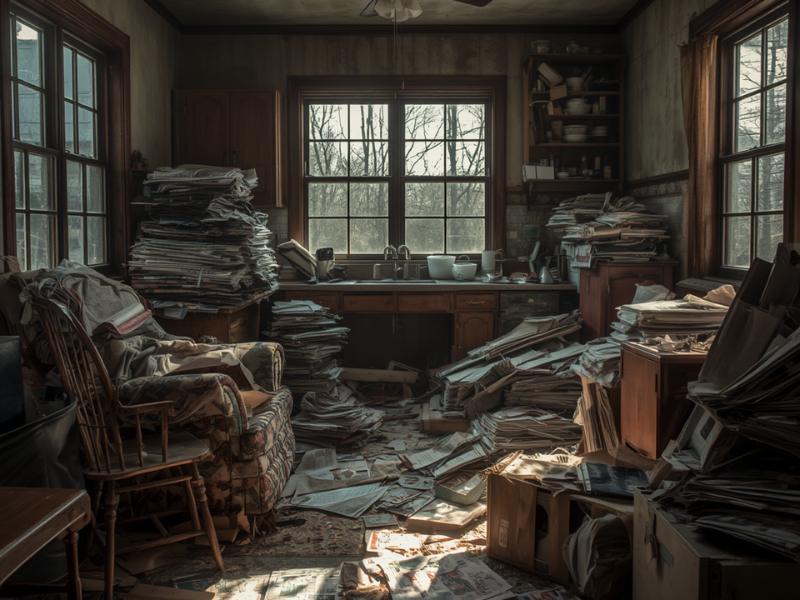
Quick answer: Hoarding exists on a spectrum. Most UK frameworks use a 1–9 Clutter Image Rating scale, often grouped into three broad levels. Level 1 is relatively manageable clutter with rooms still accessible. Level 2 is where safety and function start to break down. Level 3 is the most serious, with rooms blocked, utilities failing and health risks present. The stages are not a formal clinical diagnosis but a practical tool for assessing risk level and deciding what kind of support is needed.
Hoarding disorder is recognised in the DSM-5 as a distinct mental health condition. It involves the excessive accumulation of items, a powerful difficulty discarding possessions, and a level of distress or impairment that affects daily life. It is not about being messy or disorganised. The clutter builds because letting go of stuff feels genuinely painful, not because someone does not care.
Research suggests hoarding affects between 2% and 6% of the UK population. On a mid-2025 UK population of roughly 69.5 million, that is somewhere between 1.4 million and 4.2 million people living with some level of this disorder. Some estimates put that figure closer to 3.5 million. Despite those numbers, only around 5% of those affected are thought to ever come to the attention of professionals. That means the vast majority of people struggling with this are doing so quietly, often for years.
The word "hoarding" still carries a lot of stigma. Shame and embarrassment stop people from asking for help, which means the behaviour often goes unchecked until it reaches a point where rooms become inaccessible and the house itself becomes a health risk.
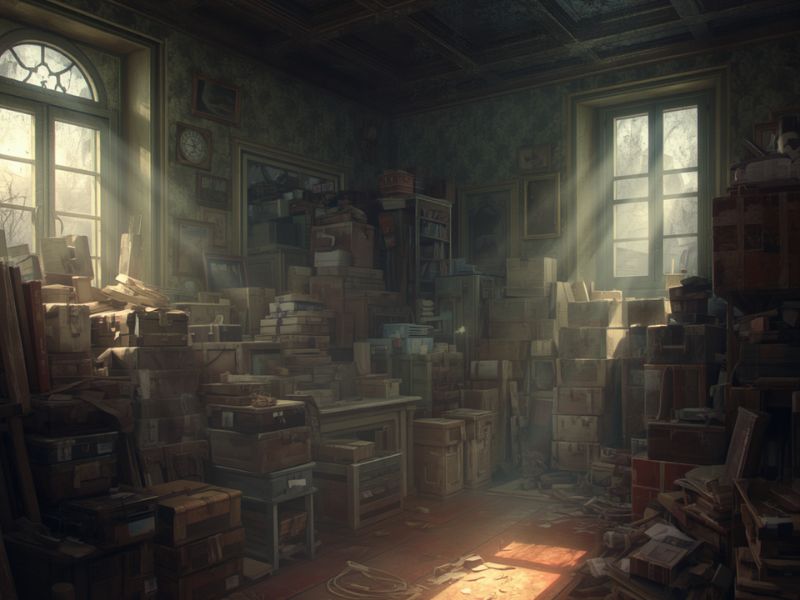
Most people have clutter. Piles of newspapers on the side, a spare room that has got a bit out of hand, boxes that have not been unpacked since a post-move clear-out. That is different from hoarding disorder.
The key distinction is the emotional attachment to possessions and the distress caused by the idea of discarding them. A hoarder often assigns high value to items others would consider worthless. They may keep old bills, broken furniture, food packaging, or animals beyond what they can safely care for. The clutter is not random; it is tied to anxiety, avoidance, and often a deep belief that every item might matter one day.
Hoarding can also develop following trauma. Research has found links between hoarding tendencies and grief, abuse, and difficult life experiences. For some, keeping things is a way of managing emotional pain they have not been able to process. For others, it is tied to family history, with hoarding disorder appearing more commonly in people who have a close relative with the condition.
Social isolation is a common outcome. Friends stop visiting. Family connections weaken. Someone affected by hoarding disorder often knows things have gone too far but feels unable to act alone.
In the UK, hoarding is commonly assessed using the Clutter Image Rating scale. It runs from 1 to 9 and uses photographs of rooms at varying levels of clutter, from a clear, tidy space at 1 through to completely inaccessible rooms at 9. Professionals use it to give an objective picture of a home's condition rather than relying on subjective descriptions.
Some frameworks also reference the National Study Group's Clutter Scale, which rates clutter from 1 to 5, and the Squalor Survivors Scale, which has four degrees of seriousness. These are not formal clinical tools. They are practical guidance to help professionals, families and agencies assess risk and plan the right response.
The three broad levels, which group the 1–9 scale into lower, moderate and higher categories, are the most commonly used framework in UK housing and safeguarding contexts.
It is also worth noting that levels of hoarding are informal guidelines, not formal clinical tools. The diagnosis of hoarding disorder itself is determined by a mental health professional, not by a clutter score.
Level 1 corresponds roughly to clutter ratings 1–3 on the Clutter Image Rating scale. At this stage, the home still has accessible entrances and exits, stairs can be used, and rooms can generally be used for what they were meant for. It may look untidy, but a kitchen is still a kitchen, a bedroom is still a bedroom.
This level is not always classified as hoarding in the clinical sense. In many UK frameworks, Level 1 is treated as a lower-level concern where early advice or general housekeeping assistance may be more appropriate than a full specialist intervention.
A hoarder at this stage may not recognise themselves as such. They might describe themselves as a collector, or say their home is simply disorganised. The signs are there, but they are subtle, making it easier to intervene before the signs a cluttered home has become a health or biohazard risk become apparent.
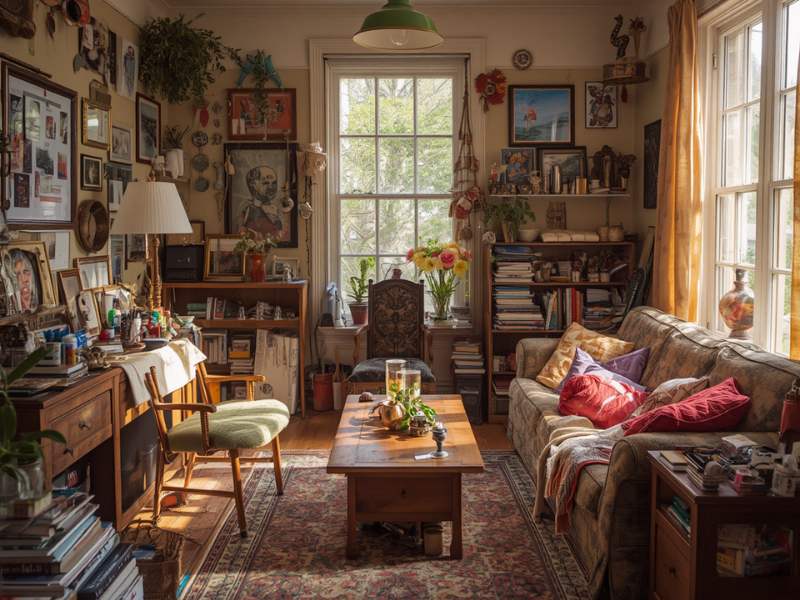
The clutter may be mostly contained to one corner of a room or concentrated in specific areas. Possessions are usually organised to some degree, even if that organisation only makes sense to whoever lives there. Recognizing this stage early matters because it is the point where encouragement and support are most likely to lead to meaningful change.
Friends and family sometimes notice the signs before the individual affected does. A home where stuff is beginning to accumulate in unusual places, where bills and papers cover surfaces and there is a growing reluctance to let people in, can be an early indicator worth paying attention to.
The behaviour at Level 1 is often manageable. With the right support, professional organizers, practical help and compassionate conversations, many people can begin to discard items they no longer need and reclaim the space.
Level 2 corresponds to clutter ratings 4–6. This is where the situation moves beyond ordinary untidiness and starts to affect how safely the home can be used. Hallways may become difficult to move through. Some rooms may no longer be functional for their intended purpose. Food preparation, cleaning and basic hygiene can become harder to manage.
UK framework examples describe this stage as potentially involving blocked doors, some windows that are difficult to open, light pest activity, noticeable odours, soiled food preparation areas, and missing or non-working smoke alarms. One exit may be blocked. The kitchen may be in a state where safe cooking is no longer straightforward.
How serious things have become is harder to ignore at this stage. Friends notice. Neighbours may raise concerns. Bills can go unopened because the clutter around them feels like one more thing that is too much to deal with.
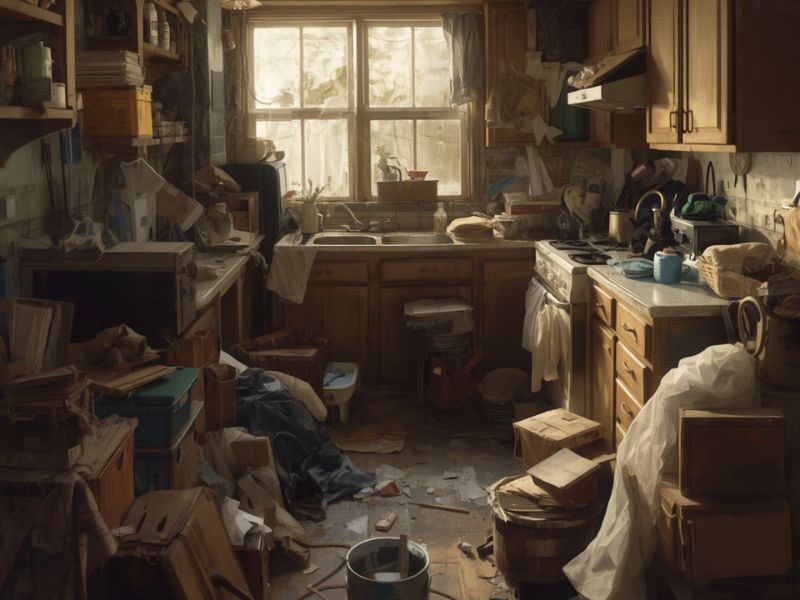
Level 2 does not automatically mean a formal safeguarding referral. But it can raise serious concern when there are children in the home, vulnerable adults with care needs, fire risk, pests, or poor sanitation. The clutter level alone is only part of the assessment.
At this stage, the emotional distress around discarding possessions can be very high. Anxiety about getting rid of items, shame around the state of the home, and difficulty letting professionals or family in can all make it harder to get help. People at this stage often know something is wrong but feel overwhelmed and unsure where to start.
The impact can spread beyond the home itself. A wife or partner may struggle with the tension between supporting someone they love and managing a living space that is becoming difficult and stressful. Relationships face real strain. In some cases, hoarding disorder has been cited in the breakdown of marriage and long-term partnerships. The disorder affects the whole family, not just those immediately around them.
Treatment at Level 2 might include talking therapy, support from a therapist experienced in obsessive-compulsive related conditions, help from professional organizers, and a specialist team to assist with restoring rooms to a functional state.
Level 3 corresponds to clutter ratings 7–9. At this stage, whole rooms are typically inaccessible. Exits may be blocked. Windows often cannot open. Utilities may not be working. The home may have severe pest infestations, rotting food, human or animal waste, and no safe space to sleep.
This is squalor in the truest sense of the word. The risks go far beyond discomfort. Clutter accumulation of this severity can cause respiratory issues and allergies from dust, mould and animal waste. Structural damage to the property is possible. Fire risk increases significantly because large volumes of paper, cardboard, newspapers, furniture and other materials can fuel a blaze and make it nearly impossible to escape.
London firefighters attended 1,028 fires involving hoarding in 2025, up from 954 in 2024, the highest recorded figure since 2022. More than 970 people have been injured in London alone in fires involving hoarding since 2021. In 2025, 226 of those fires were caused by cooking incidents, with a further 137 caused by items placed too close to a heat source.
Some frameworks identify stages beyond the three-level grouping. The most extreme stages, sometimes called Level IV and Level V in other classification systems, describe hazardous living conditions with structural damage, completely unusable living areas, and conditions that are dangerous even for professionals to enter without protective equipment. These stages require coordinated specialist response and are not safe to address without proper planning.
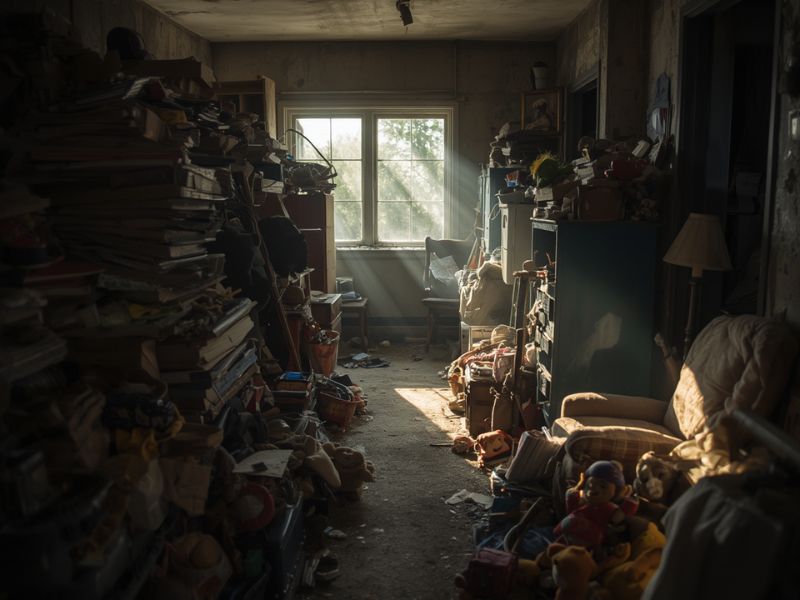
The signs at this level are often visible before you even enter the property. Trash or waste outside, animals in poor condition, neighbours expressing ongoing concern, windows that appear permanently blocked from the inside, and utilities that have been cut off are all indicators.
Inside, a hoarder living at this level may have developed routes through the clutter, narrow pathways through rooms that are otherwise completely inaccessible. Their ability to discard anything at this stage is severely compromised. The emotional attachment to every item has become so developed that the idea of removing anything can trigger acute distress.
A home at this level requires professional involvement from multiple directions. Housing providers, adult social care teams, environmental health, fire services, mental health professionals, GPs, animal welfare teams and specialist property clearance providers may all need to play a part.
Someone living there is often deeply affected by hoarding disorder to the point where insight into the danger of their own situation is limited. Recognising this is not a failure of character. The disorder, the emotional weight of it, the depression and anxiety that so often run alongside it, and the avoidance that has developed over time all combine to make meaningful change impossible without external support and proper treatment.
One important point that often gets missed: a single home can have different hoarding stages in different rooms. The lounge might be at a Level 2. The bathroom might have reached Level 3 because it is unusable or contaminated. The bedroom might still be at Level 1 because the person sleeping there has kept it relatively clear as a refuge.
This is why professionals hoarder cleaners do not judge a property from a single area. Good assessments look room by room and ask specific functional questions. Can the person cook safely? Can they wash? Can they sleep in a bed? Can they move between rooms? Can they open windows and access exits?
When the answer to several of those questions is no, regardless of how the rest of the house looks, the risk level is high. This room-by-room approach gives a much more accurate picture than a single walk through the front door.

The health consequences of living in a heavily cluttered or contaminated home are real. Clutter accumulation creates conditions where dust, mould, damp and pests thrive. Breathing problems, skin conditions, and infections are all more common in properties at higher hoarding stages. At the most severe levels, where animal waste or rotting food is present, the risk of serious illness is real.
Children growing up in hoarded homes face additional risks. Research has linked developmental delays and emotional harm to children raised in environments where the home is consistently unsafe or unsanitary. The neglect that can accompany a situation like this is a recognised safeguarding concern in the UK.
In 2024 to 2025, adult safeguarding concerns in England rose to an estimated 640,240 cases. The most common location of risk in concluded safeguarding enquiries was someone's own home. Hoarding disorder, particularly at higher stages, is a known driver of those figures.
Hoarding disorder is associated with high rates of depression and anxiety. Many living with the disorder also carry deep emotional distress that predates the hoarding itself. Trauma, grief, and difficult life events are common threads in the history of people who develop severe compulsive behaviour.
The shame and embarrassment of the condition can make it genuinely isolating. Friends stop being invited in. Family visits become strained or stop altogether. Social contact shrinks. The person struggling may find that the clutter feels like the one thing they can control, even as it takes control of their life.
The emotional difficulty of discarding items is one of the defining features of hoarding disorder as a mental health condition. This is not sentiment about a few favourite objects. It is a genuine and often severe psychological response, ranging from intense anxiety through to panic, triggered by the thought of getting rid of anything.
Treatment for hoarding disorder can include talking therapy and medication. A therapist with experience in hoarding and obsessive-compulsive related conditions can help a person understand the emotional attachment behind the behaviour and start to work through the difficulty of discarding things. Recovery is possible, but it takes time, consistent treatment, and the right support.
The levels of hoarding are not about judging someone. They are tools for getting clarity on what kind of help is actually needed. Understanding the value of that early assessment is key. Someone at Level 1 may benefit from a conversation with their GP or a referral to a support service. Someone at Level 2 may need professional organizers, a therapist and possibly a property clean to help restore functional space in their home. A hoarder at Level 3 will almost certainly need coordinated professional involvement across multiple agencies.
Recognizing the signs early and acting on them is the most effective thing families can do. The further the stages progress, the more difficult and costly it becomes to address.
The stages are easier to work through at the lower end of the scale. A home at clutter ratings 1 to 3 can often be brought back to a fully functional state with support and the right encouragement. A home at Level 3 requires far more resource, time and care to restore safely.
The difficulty is that shame, avoidance and the disorder itself often delay help until the situation has become severe. If you are supporting a family member or friend who you think may be affected, guidance from a GP, a mental health team, or a specialist hoarding support charity is a good starting point. Encourage a conversation rather than a confrontation. Distress and resistance are a normal part of the disorder, not stubbornness.
At Scrubbed With Love, we work alongside families, support workers and other professionals to provide specialist cleaning for hoarded properties. We understand that helping someone discard and remove clutter in this kind of property is not the same as a standard clean. There is emotional weight in every decision. There is stuff with meaning, even if that meaning is not visible to anyone else. Our team approaches every job with discretion, care and without judgement.
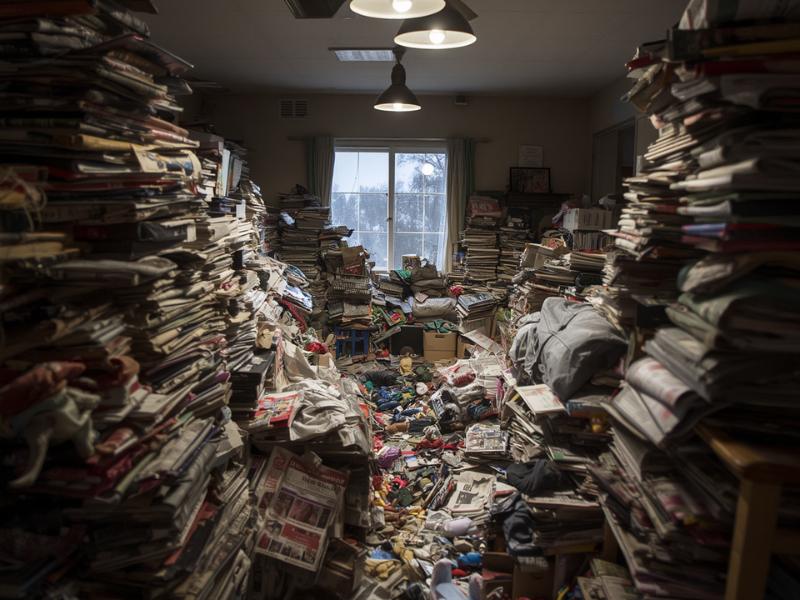
The cost of professional hoarder cleaning for properties with accumulated clutter in the UK varies depending on the level and seriousness of the hoarding, the size of the property, and what is involved. Based on figures ranging across multiple UK sources, a single room clearance for a lower-level hoarding situation might start at around £150 to £350. A full property clear at Level 3, involving waste removal, deep sanitation, pest-contaminated areas, can range from £1,500 to £5,000 or more.
These figures are a rough guide only and the actual cost will vary based on the specific conditions found. We always carry out an assessment before providing a quote so there are no surprises.
At Scrubbed With Love, we provide specialist hoarding and deep cleaning services across Liverpool, Manchester and the surrounding area. If you need advice or support, contact our team directly.